 716.874.3000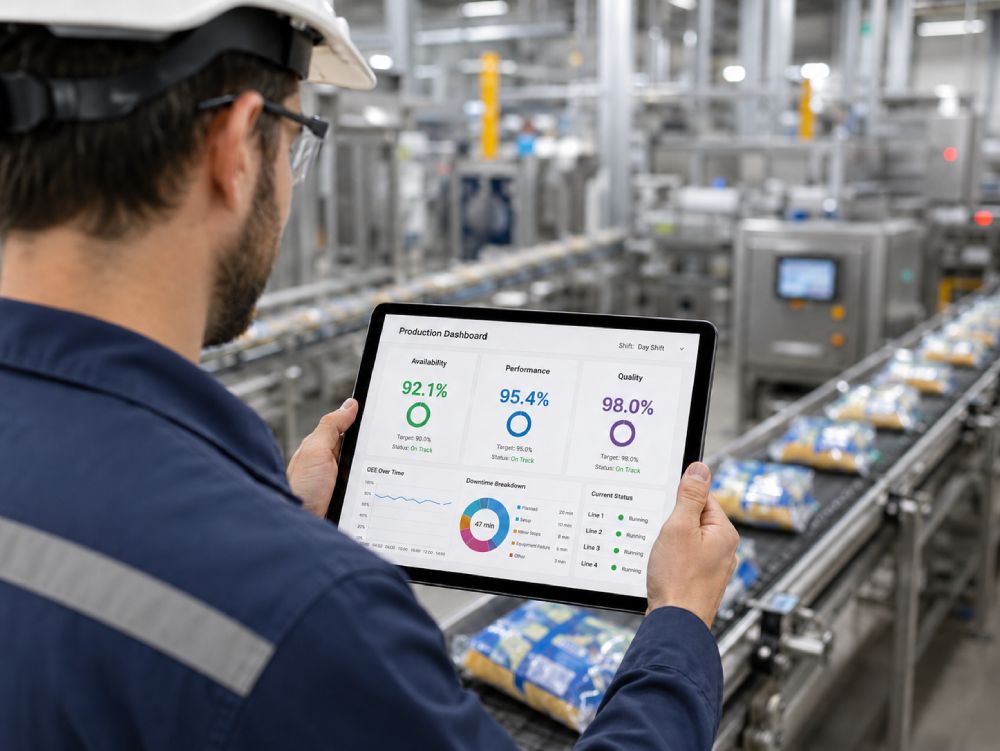
In manufacturing, the packaging line is where productivity meets profitability. It is the final step before product reaches the customer, and any inefficiency at this stage directly affects output, labor utilization, material costs, and delivery timelines. A high-performing packaging line supports growth, but a struggling one quietly drains margins.
The good news is that packaging line optimization is not guesswork. Proven strategies exist to improve throughput, reduce downtime, and build more resilient operations.
Why Packaging Lines Slow Down or Become Inefficient
Even well-designed packaging lines lose efficiency over time. Growth, product changes, aging equipment, and evolving production demands introduce friction into the system.
Equipment-Related Bottlenecks
Many slowdowns begin with mismatched or outdated equipment. A high-speed filler paired with a slower capper or labeler creates an immediate bottleneck. Conversely, oversized downstream equipment may sit idle while waiting for upstream processes to catch up.
In liquid packaging, product characteristics can amplify these challenges. Variations in viscosity, temperature, or foaming behavior can affect fill speeds and consistency. Wear on pumps, seals, and valves further reduces performance if not addressed proactively.
Poor Line Integration
A packaging line operates as a system, not a collection of standalone machines. When equipment lacks proper synchronization, micro-stoppages multiply—conveyors back up, accumulation tables overflow or sit underutilized, and operators step in to manually intervene, all of which add variability. Without integrated controls and clear communication between machines, minor disruptions ripple across the entire line.
Unplanned Downtime & Reactive Maintenance
Reactive maintenance is one of the most common drivers of inefficiency. Waiting for components to fail leads to emergency repairs, rushed troubleshooting, and extended downtime.
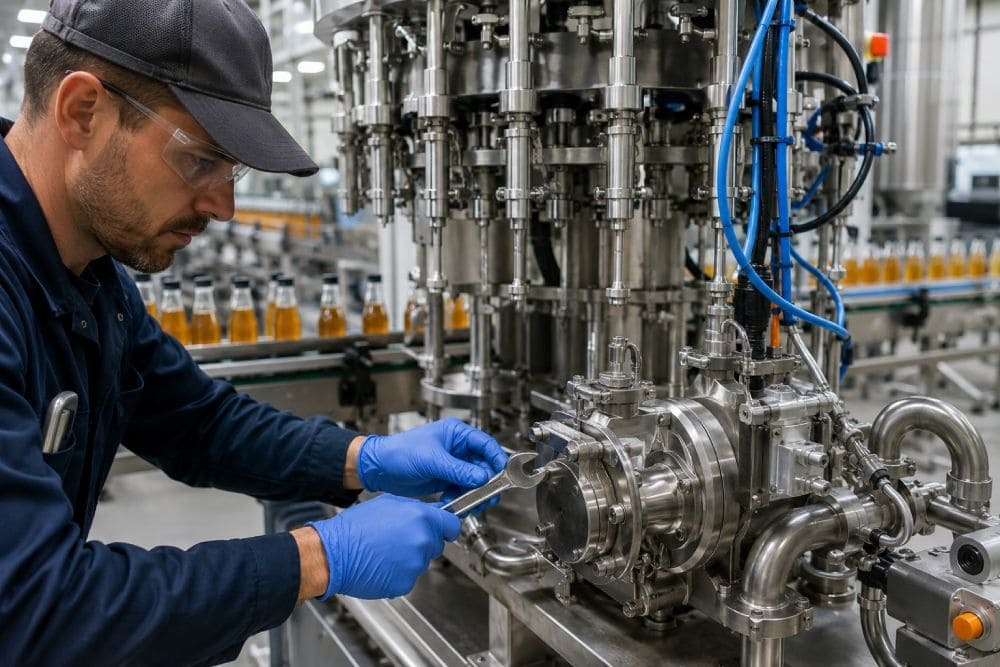
Liquid systems are especially vulnerable to wear. Gaskets, nozzles, pumps, and product-contact components require consistent inspection. When maintenance becomes reactive rather than structured, uptime suffers.
Changeover Complexity
As product portfolios expand, stock keeping unit (SKU) variety increases. Different container shapes, cap types, fill volumes, and label formats require frequent changeovers. If tooling adjustments are manual, poorly documented, or inconsistent between shifts, changeover time increases. The result is lost production time and elevated risk of setup errors.
Workflow & Layout Constraints
Inefficient layouts create unnecessary movement of materials and personnel. For example, limited buffering space causes congestion, and poor access to equipment complicates cleaning and maintenance, particularly in washdown environments common to liquid packaging lines. Over time, these layout compromises compound into measurable productivity losses.
How to Measure Packaging Line Efficiency
Before optimization begins, performance must be measured accurately. Assumptions are rarely reliable indicators of line health.
Overall Equipment Effectiveness (OEE)
OEE remains one of the most widely used metrics in manufacturing. It evaluates performance across three dimensions:
- Availability: How often the line is running versus planned production time
- Performance: Actual output compared to theoretical maximum speed
- Quality: Percentage of good units produced without rework or scrap
For example, in liquid packaging lines, quality losses may include overfills, underfills, leaks, cap torque issues, or label misalignment. Monitoring OEE provides a clear picture of where losses occur.
Downtime Tracking
Micro-stoppages often go unnoticed yet accumulate into significant lost time. However, categorizing downtime into planned and unplanned events reveals patterns. Modern data logging systems and dashboards allow teams to capture downtime causes in real time, creating a foundation for targeted improvement.
Scrap, Rework, & Waste Metrics
Product loss can be costly, especially for liquid packaging operations. Overfilling increases material expense, while underfilling risks compliance issues and customer dissatisfaction. Tracking scrap rates and material waste provides insight into both efficiency and profitability.
Throughput & Bottleneck Analysis
Throughput measures units produced per minute or hour. Comparing actual output to design capacity highlights gaps in performance.
Equally important is identifying the true constraint. The slowest or most interruption-prone machine defines the maximum output of the entire line. Improving non-constraint equipment yields little benefit if the bottleneck remains unchanged.
Changeover Time Measurement
Monitoring how long it takes to switch between SKUs and reach first-good-package status helps identify procedural inefficiencies. Standardized measurement often uncovers opportunities to reduce setup time dramatically.
11 Top Strategies for Optimizing Packaging Line Efficiency
Once performance gaps are visible and bottlenecks clearly identified, improvement and optimization can become intentional rather than reactive.
The following strategies represent proven approaches manufacturers use to increase throughput, reduce downtime, and create more stable, scalable liquid packaging operations.
1. Identify & Eliminate Bottlenecks First
Every packaging line has a constraint. That constraint determines total output, no matter how efficient the surrounding equipment may be.
Start by mapping the entire line from infeed to palletizing. Review cycle times for each machine. Observe where product accumulates and where operators intervene most frequently. Data combined with on-floor observation often reveals hidden delays that reports alone do not capture.
Improving the true constraint may involve increasing speed, stabilizing performance, reducing minor stops, or upgrading equipment altogether. Once that constraint improves, another area may surface as the new limiter. This continuous improvement cycle is the foundation of sustained throughput growth.
2. Automate & Integrate Equipment
Automation reduces variability and removes unnecessary manual handling. More importantly, full integration allows machines to communicate and operate as one coordinated system.
In liquid packaging lines, synchronization between the filler and downstream equipment is critical. If a capper pauses or a labeler fails, the filler should respond automatically to prevent overflows or product spills. Centralized controls and unified human-machine interfaces (HMIs) provide operators with visibility across the entire line rather than isolated machine level data.
Integrated systems also simplify diagnostics. When alarms and performance metrics are consolidated, root causes are easier to identify and correct quickly.
3. Invest in Right Sized, Scalable Equipment
Packaging lines often struggle because equipment was selected for past demand rather than current or projected growth. Undersized fillers or cappers create persistent constraints, while oversized systems can introduce inefficiencies and unnecessary capital expense.Selecting equipment that aligns with realistic production goals is critical. For liquid operations, this includes considering viscosity ranges, fill accuracy requirements, container variability, and sanitation standards.
Modular and scalable systems offer flexibility. As demand increases or product lines expand, additional stations or upgraded components can be incorporated without redesigning the entire line.
4. Implement Predictive & Preventive Maintenance
Downtime rarely occurs without warning. Components show signs of wear before failure: pumps losing efficiency, seals degrading, sensors drifting out of calibration, etc.
Preventive maintenance programs schedule inspections and part replacements at defined intervals. Predictive strategies go further by using monitoring tools to detect changes in vibration, pressure, temperature, or performance trends. Maintenance teams can then intervene before a breakdown disrupts production.
In liquid packaging environments, this approach is especially valuable due to constant exposure to product contact, washdown procedures, and mechanical stress.
5. Optimize Line Layout & Material Flow
Physical layout influences performance more than many manufacturers realize. Poorly positioned accumulation tables, tight operator walkways, or congested case packing areas introduce delays that compound throughout the shift. Alternatively, thoughtful layout design reduces wasted motion, improves safety, and supports smoother production flow.
For example, strategic buffering between packaging machines absorbs short interruptions without stopping the entire line. Similarly, adequate spacing supports safe maintenance access and efficient sanitation practices, both critical in liquid packaging settings.
6. Standardize Changeovers & Packaging Formats
Frequent SKU changes are common in modern manufacturing. Without structured changeover procedures, production time disappears quickly.
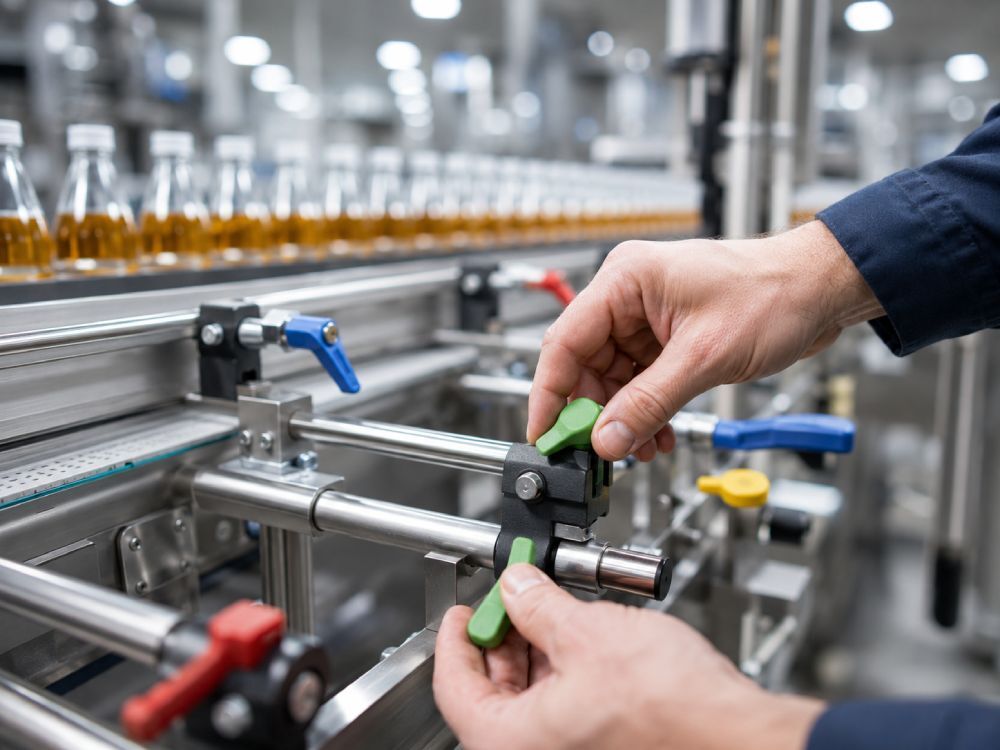
Quick change tooling, color-coded parts, and documented step-by-step procedures significantly reduce setup duration. Tracking changeover performance highlights inconsistencies and reveals opportunities for refinement. Where feasible, standardizing container families, closure types, and labeling formats simplifies mechanical adjustments and shortens transition times.
Even modest improvements in changeover efficiency translate into additional productive hours each week.
7. Use Data-Driven Performance Monitoring
Real-time data provides clarity. Instead of relying on end-of-shift summaries, teams can monitor performance continuously.
Dashboards that track OEE, downtime categories, throughput, and quality metrics allow operators and supervisors to respond immediately when performance drifts. Over time, trend analysis reveals recurring disruptions that merit deeper investigation.
Data-driven decision-making replaces assumptions with measurable insights, accelerating improvement efforts.
8. Apply Lean Manufacturing Principles
Lean thinking focuses on eliminating activities that don’t add value. In packaging environments, waste can take many forms including idle time, excess inventory, unnecessary motion, and material overuse.
Techniques such as 5S workplace organization improve visibility and reduce search time for tools and components. Structured improvement events encourage cross functional collaboration to solve persistent performance issues.
When applied consistently, lean principles create a culture where inefficiencies are identified and addressed systematically rather than tolerated.
9. Minimize Product & Packaging Waste
Liquid product loss directly impacts margins. Overfilling increases giveaway, while underfilling risks compliance and customer dissatisfaction. Leaks and damaged containers add rework and cleanup time.
Improving fill accuracy through calibrated equipment, stable product supply, and consistent container handling reduces waste significantly, which helps improve both profitability and operational cleanliness. Early detection systems for cap torque and seal integrity prevent defective units from advancing downstream.
10. Invest in Operator Training & Engagement
Equipment performance depends heavily on the people running it. Skilled operators identify abnormal sounds, inconsistent fills, and small disruptions before they escalate.
Cross training builds flexibility across shifts. Clear standard operating procedures promote consistency, and encouraging operators to document issues and propose improvements strengthens continuous improvement initiatives.
An engaged workforce supports long term packaging line stability.
11. Consider Advanced Solutions
As production demands increase, advanced technologies may offer additional gains. For example:
- Multipacking strategies can increase output in secondary packaging without expanding footprint.
- Vision systems provide automated inspection for fill levels, label placement, and closure integrity.
- AI-powered robotics can streamline repetitive tasks such as case packing and palletizing.
The value of these solutions depends on production volume, product mix, and growth objectives. A strategic equipment partner can help evaluate whether advanced automation aligns with operational goals.
Packaging Line Optimization FAQs
What Is Packaging Line Optimization?
Packaging line optimization is the process of improving equipment performance, workflow, and system integration to increase throughput, reduce downtime, and lower waste. It involves analyzing bottlenecks, upgrading or integrating machinery, improving maintenance practices, and using data to drive continuous improvement across the entire line.
How Do You Know If a Packaging Line Needs Optimization?
Common indicators include recurring downtime, inconsistent output, excessive product waste, long changeover times, frequent manual intervention, and failure to meet production targets. If actual throughput consistently falls below design capacity, it’s time to evaluate the line.
What Is OEE, & Why Does It Matter?
Overall equipment effectiveness, or OEE, measures performance across availability, speed, and quality. It provides a clear snapshot of where production losses occur. Tracking OEE helps manufacturers identify whether downtime, slow cycles, or quality defects are limiting performance.
How Can Liquid Packaging Lines Improve Fill Accuracy?
Improving fill accuracy typically involves calibrating filling equipment, stabilizing product flow, maintaining pumps and valves, and using precise control systems. Regular inspection of wear components and consistent container handling also contribute to more consistent fill volumes.
What Is the Biggest Cause of Downtime in Packaging Lines?
Unplanned maintenance and equipment mismatches are among the most common causes. Worn components, improper synchronization between machines, and reactive maintenance practices frequently lead to interruptions that compound over time.
How Can Manufacturers Reduce Changeover Time?
Standardized procedures, quick change tooling, operator training, and tracking setup performance are effective ways to shorten changeovers. Simplifying container and closure formats where possible also reduces mechanical adjustments during transitions.
Is Automation Always Necessary for Packaging Line Optimization?
Not always. While automation can significantly improve consistency and throughput, optimization often begins with identifying bottlenecks, refining processes, and improving maintenance discipline. Automation becomes more valuable as production volume, complexity, or labor constraints increase.
When Should a Company Upgrade Its Packaging Equipment?
Equipment upgrades make sense when current machinery consistently limits throughput, requires excessive maintenance, cannot support new product formats, or struggles to meet quality standards. A thorough line assessment can determine whether targeted upgrades or a broader system redesign will deliver the best return.
Choose Oden Machinery for Trusted, High-Quality Used Liquid Packaging Equipment
Packaging line optimization is an ongoing effort that combines measurement, smart equipment decisions, disciplined maintenance, and a commitment to continuous improvement. For manufacturers operating liquid packaging lines, success depends on understanding the unique challenges of fluid handling, fill accuracy, sanitation, and system integration. When equipment works in harmony and data drives decision-making, throughput increases while downtime declines.
Is your liquid packaging line limiting growth or struggling with recurring downtime? We can help.
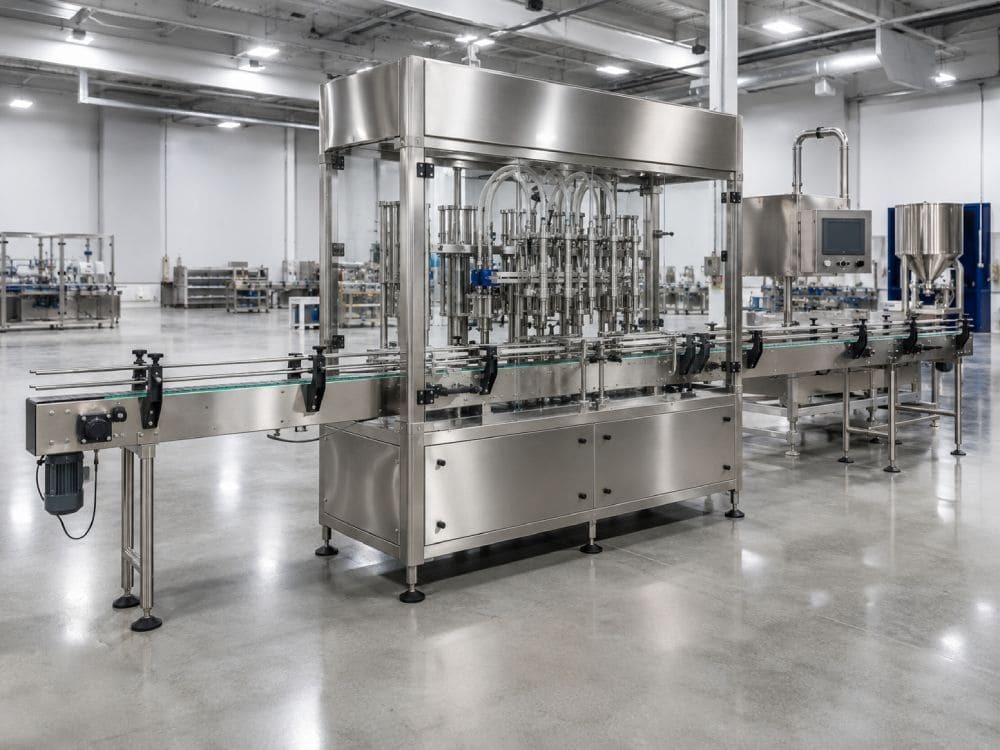
At Oden Machinery, we specialize in designing and integrating high-quality used liquid packaging systems tailored to each manufacturer’s needs. Every machine is thoroughly inspected, refurbished, and supported with expert service to ensure your production line operates smoothly and efficiently.
Whether you’re looking for custom filling equipment or want to create a fully integrated line, we have the equipment and expertise to match your needs.
Contact us today to learn more about our available inventory of used liquid packaging equipment and find the perfect solution for your operation.
