
 716.874.3000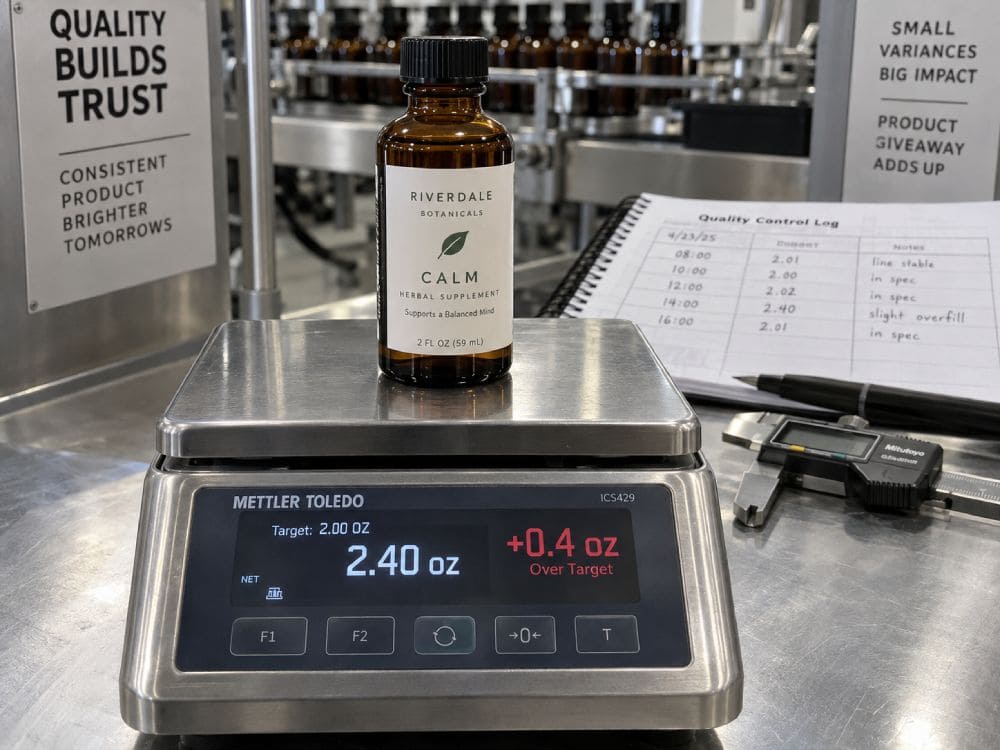
Most growing brands hit the same wall. Manual filling works well enough in the beginning, when volumes are low, the product mix is small, and one person can manage the entire fill process without much friction. Then demand picks up. New SKUs get added. A retail account or contract comes through that requires tighter fill accuracy and faster turnaround. Suddenly the process that was good enough is the thing holding the operation back.
The transition from manual filling to more controlled, scalable equipment is one of the most common inflection points in a growing liquid packaging operation. It is also one of the most misunderstood. The challenges that show up during this transition are predictable, but they are easy to misdiagnose, and the fixes are not always what they appear to be.
This guide covers the most common small-batch filling challenges that growing brands encounter as they scale, what is actually causing them, and what the right next steps look like.
In this guide:
- Why Manual Filling Stops Working
- Fill Accuracy Problems & What Causes Them
- Throughput & Capacity Constraints
- Changeover & Product Mix Complexity
- Equipment Selection Mistakes
- FAQs
Why Manual Filling Stops Working
There’s nothing wrong with manual filling. For early-stage operations or small-batch runs, it’s often the best option. The problem is not manual filling itself. The problem is staying with it past the point where it can realistically support the operation.
The Output Ceiling Arrives Faster Than Expected
Manual filling throughput is determined by how fast one person can work through a repeatable physical process. That ceiling is low, and it arrives quickly when volume starts to climb. An operator filling 50 containers per shift has a very different experience than one filling 300. At higher volumes, fatigue, inconsistency, and physical strain all become production variables, not just HR concerns.
The signal to watch for: Output has plateaued even though demand has not. The filler is running all shift but finished containers are not keeping pace with orders.
Consistency Becomes Harder to Control
With manual filling, fill accuracy depends on the operator's judgment, attention, and technique. On a good day with a focused operator, results can be reasonable. On a long shift, or with a new person running the machine, variation increases. Fill weights drift. Some containers are over. Some are under. The average might look acceptable, but the range is too wide.
This matters more as brands grow. Retail buyers, distributors, and regulated markets expect documented consistency. A fill process that varies by operator or by time of day is a risk.
The signal to watch for: Fill weights vary more than they should from container to container, and the variation is not tied to the product. It is tied to who is running the machine and when.
Labor Cost Becomes Disproportionate
Manual filling is labor-intensive by design. That is fine when volume is low and the labor cost per unit is manageable. As volume increases, the math changes. A dedicated operator spending the majority of a shift at the filler is an expensive arrangement when the same output could be achieved with better equipment and less direct labor involvement.
The signal to watch for: The operation is adding headcount to keep up with filling demand rather than investing in equipment that could handle the load more efficiently.
Fill Accuracy Problems & What Causes Them
Fill accuracy is one of the most common complaints from small-batch operations that are scaling. It is also one of the most misunderstood, because the root cause is not always obvious. Blaming the equipment is easy. The actual cause is usually somewhere else.
Product Giveaway Is Costing More Than It Looks
Overfilling is the most common fill accuracy problem in small-batch operations, and it tends to go untracked until someone runs the numbers. If the target fill is 16 ounces and the average fill is 16.4 ounces, that 0.4-ounce overfill might seem trivial. Across 500 containers per shift, it is 12.5 pounds of product given away every day. For high-value formulations, that number adds up fast.
What causes it: Operator-controlled fill stops, inconsistent pump timing, and no closed-loop feedback between the fill system and the actual amount dispensed. The fix is moving to a filling system that controls the cut-off based on weight or volume rather than operator judgment.
Viscosity Changes Are Affecting Fill Consistency
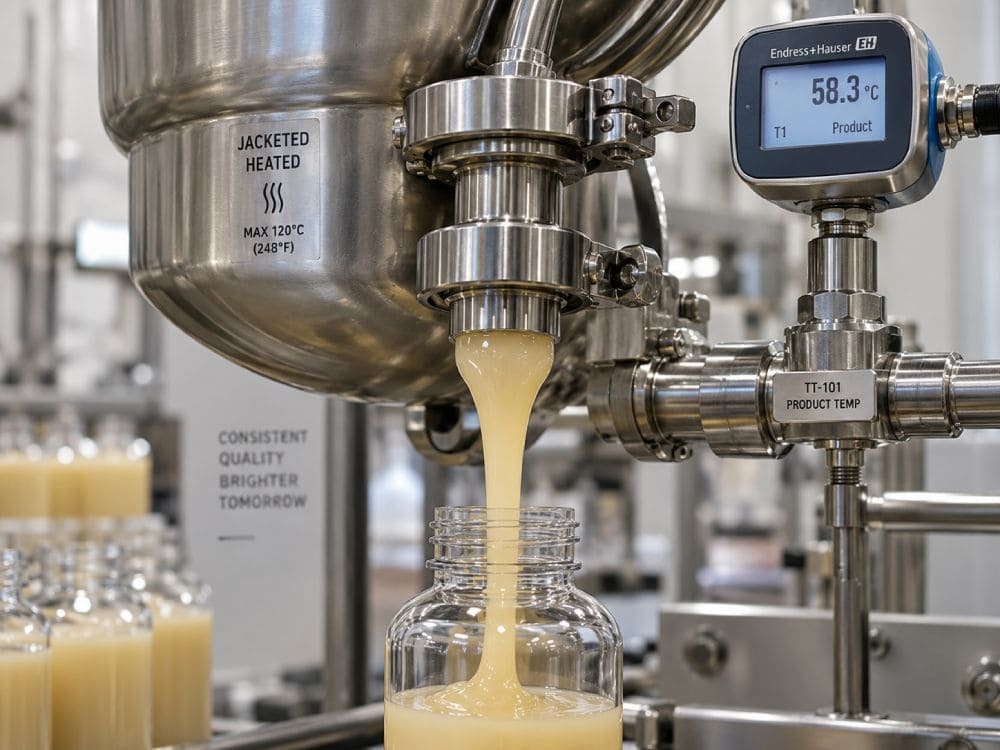
Many liquid products do not behave the same way at the start of a shift as they do three hours in. Temperature changes in the production environment, product sitting in a supply tank, and even batch-to-batch variation in raw materials can all affect viscosity, and viscosity directly affects how product flows through a pump and nozzle.
What causes it: A fill system that is calibrated for one set of conditions will produce different results when those conditions change. Operations that fill temperature-sensitive or variable-viscosity products need filling equipment with the ability to compensate, either through fill profiling, flow control, or regular recalibration.
The Fill System Is Not Matched to the Product
Not every pump works with every product. A gear pump that handles thin, free-flowing liquids well may struggle with a thick, particulate-heavy formulation. A peristaltic pump that works well for shear-sensitive products may not be the right choice for a high-volume, low-viscosity application.
What causes it: Equipment selected based on price or availability rather than product compatibility. The fix is matching the pump type, nozzle design, and fill method to the actual product characteristics before purchasing equipment.
Throughput & Capacity Constraints
Throughput problems in small-batch filling are rarely caused by just one thing. They are usually the result of several constraints compounding on each other, and fixing one without addressing the others produces limited results.
The Filler Is the Bottleneck, But Not Always for the Reason It Looks Like
When output is falling short, the filler is the obvious suspect. Sometimes it is the problem. More often, the filler is performing as designed and the real constraint is somewhere else: the product supply is not keeping up, the operator is spending too much time staging containers, or the downstream capping and labeling process cannot keep pace with what the filler is producing.
What causes it: Treating the filler as an isolated machine rather than one step in a connected process. Before upgrading the filler, map the full workflow from product supply to finished container and identify where the actual slowdown is happening.
Small Batches Mean Frequent Starts & Stops
One of the defining characteristics of small-batch filling is that runs are shorter. That means more time spent setting up, cleaning, and changing over relative to actual filling time. An operation running ten different products per week in batches of 200 containers each is spending a significant portion of its production hours not filling.
What causes it: A filling process that was designed around one product and one container without accounting for the overhead of frequent changeovers. The fix involves both equipment selection (systems with recipe storage and tool-free changeover features) and scheduling strategy (grouping compatible products to reduce cleaning demands between runs).
Single-Head Filling Creates a Hard Speed Limit
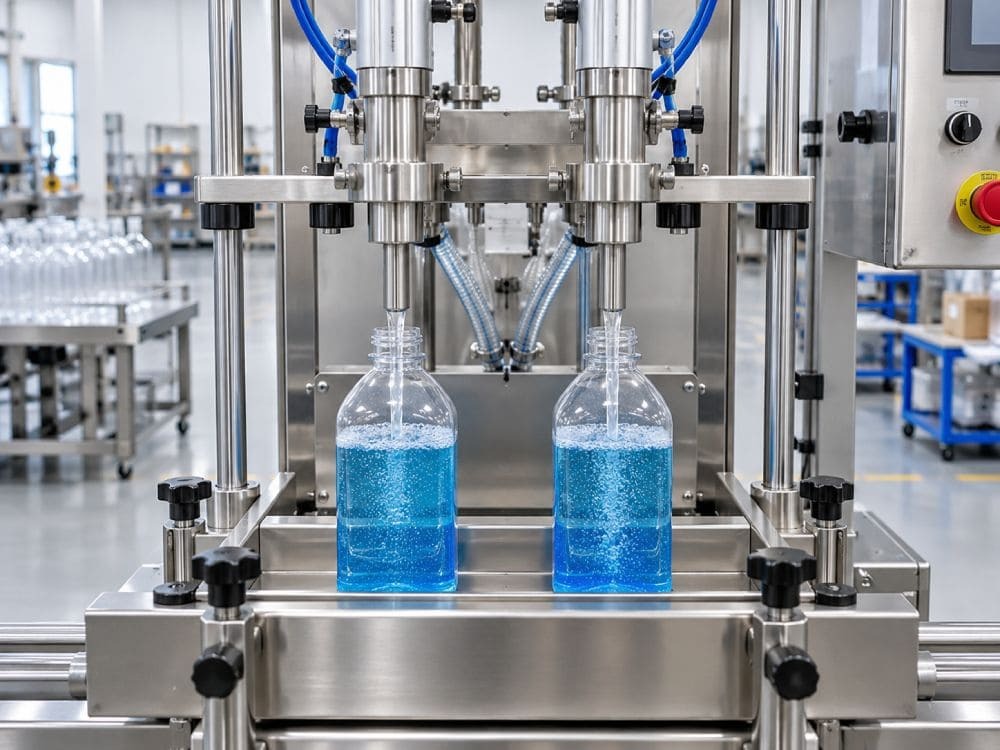
A single fill head fills one container at a time. For many small-batch operations, that is fine. But as volume grows, the single-head configuration becomes a hard ceiling that cannot be worked around without adding equipment.
What causes it: Purchasing a system sized for current volume without leaving room for growth. Operations that are consistently running at or near capacity on a single-head filler should evaluate whether a multi-head configuration or a faster semi-automatic system would extend the useful life of the equipment investment.
Changeover & Product Mix Complexity
Small-batch operations are defined by variety. Running multiple products, multiple container sizes, and multiple formulations on the same equipment is the norm, not the exception. That variety is often a competitive advantage. It is also one of the most common sources of lost production time.
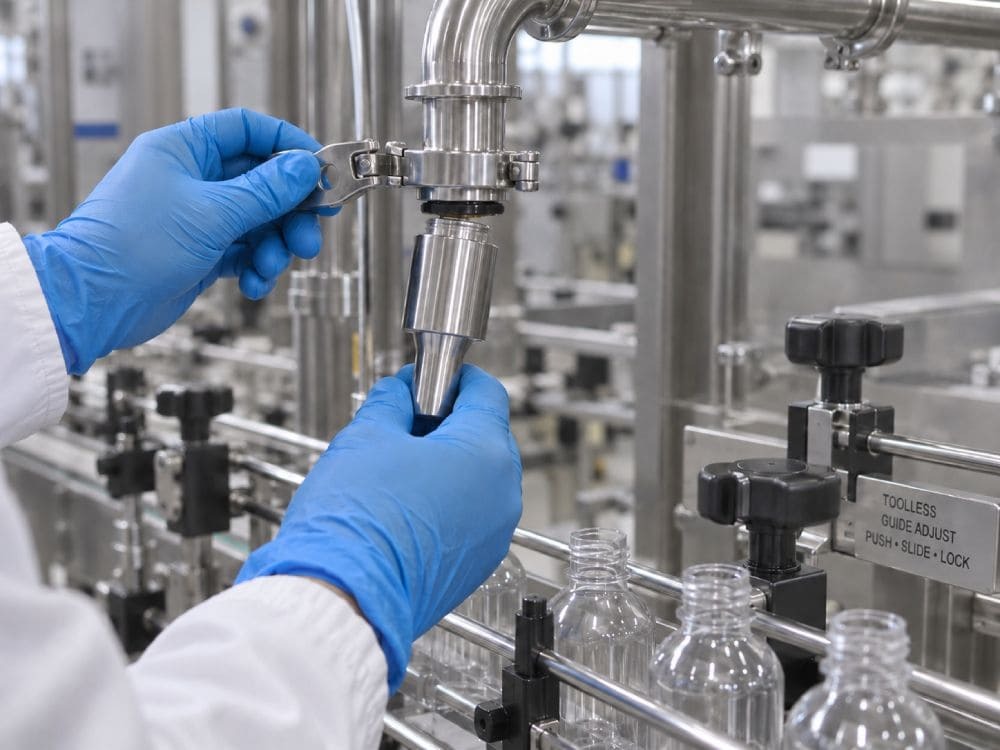
Changeover Is Taking Longer Than It Should
Every minute spent changing over between products is a minute not filling. For operations with frequent product switches, changeover time can represent a significant portion of the production day. When changeover is slow, inconsistent, or poorly documented, the impact compounds across every run.
What causes it: Equipment that was not designed with changeover in mind, and a lack of documented changeover procedures. The fix involves both sides of the problem. On the equipment side, look for systems with tool-free adjustments, quick-disconnect fittings, and recipe storage that eliminates manual re-dialing of fill settings. On the process side, written changeover SOPs that every operator follows the same way reduce variability and catch errors before they affect the next run.
Cleaning Between Runs Is Eating into Production Time
Cleaning is part of the changeover process, and in small-batch operations it happens frequently. When cleaning takes longer than expected, or when the process is inconsistent between operators, it becomes a throughput problem as much as a sanitation problem.
What causes it: Equipment that is difficult to disassemble and clean, products that leave heavy residue, and no documented cleaning protocol. For a full breakdown of how to build a faster, more consistent sanitation process, see our guide on cleaning and sanitation for small-batch filling.
Container Variety Adds Mechanical Complexity
Running different container sizes and shapes on the same filling equipment requires adjustments. Guide rails, nozzle height, fill profiles, and container positioning all need to be dialed in for each format. When those adjustments are manual and not well documented, every changeover becomes a troubleshooting exercise.
What causes it: Buying equipment without accounting for the full range of containers the operation will need to run. Before selecting a filler, map out every container format currently in use and any that are planned, and confirm that the equipment can handle the full range with manageable changeover requirements.
Equipment Selection Mistakes Growing Brands Make
The equipment decision is where many small-batch filling challenges are created before production even starts. Getting it wrong does not always mean buying a bad machine. It often means buying the right machine for the wrong situation.
Buying for Current Volume Instead of Where the Operation Is Headed
A filler that is perfectly sized for today's output may be undersized in 18 months. Equipment selection decisions aren’t short term. The machine purchased today will likely still be in production many years from now, and the operation it needs to support will look different by then.
What causes it: Evaluating equipment based on current demand rather than projected demand. The fix is building in headroom. That does not necessarily mean buying the largest machine available. It means selecting a system that can grow with the operation, whether through additional fill heads, integration with downstream equipment, or a platform that supports future automation upgrades.
Prioritizing Price Over Product Compatibility
The lowest-cost filler is not always the wrong choice, but it is the wrong starting point for the evaluation. Equipment that is incompatible with the product, the container, or the production environment will create ongoing problems that cost more to manage than the savings from a lower purchase price.
What causes it: Treating filling equipment as a commodity purchase rather than a production system decision. The right evaluation starts with the product: its viscosity, its chemistry, its fill volume, and its accuracy requirements. The equipment has to be matched to those parameters first. Price is a factor after compatibility is confirmed.
Skipping the Benchtop-to-Semi-Automatic Transition
Some operations move directly from manual filling to a fully automated system before the production volume or process stability justifies it. Others stay on a benchtop filler well past the point where a semi-automatic system would meaningfully improve accuracy and throughput. Both are common mistakes.
What causes it: Not having a clear framework for when each equipment type makes sense. The decision between a benchtop filler and a semi-automatic system comes down to volume, fill accuracy requirements, product characteristics, and labor cost. Our comparison of benchtop vs. semi-automatic filling machines covers that decision in detail, including the volume thresholds that typically signal it is time to upgrade.
FAQs About Small-Batch Filling Challenges
What Are the Most Common Small-Batch Liquid Filling Problems?
The most common problems in small-batch liquid filling are inconsistent fill weights, slow changeovers, throughput that cannot keep pace with demand, and equipment that is not well-matched to the product being filled. Most of these problems share a common root cause: a filling process that was designed for an earlier stage of the operation and has not been updated as volume and complexity have grown.
Why Is Fill Accuracy So Hard to Maintain in Small Production Runs?
Fill accuracy in small production runs is difficult to maintain because the process is typically still operator-dependent. When the fill cut-off is controlled by the operator rather than the machine, results vary with fatigue, attention, and technique. Moving to a semi-automatic or automatic filling system that controls the fill cycle based on weight or volume is the most reliable way to improve accuracy and maintain it consistently across operators and shifts.
How Do I Improve Filling Accuracy in a Small Production Environment?
Start by identifying what is actually causing the variation. If the problem is operator-controlled fill stops, a semi-automatic filler with programmed fill control will produce a significant improvement. If the problem is viscosity variation, the fix may involve fill profiling, temperature control, or more frequent recalibration. If the equipment is simply not matched to the product, the right pump type and nozzle configuration need to be evaluated. Improving fill accuracy requires understanding the source of the variation before selecting a solution.
What Filling Equipment Is Right for a Startup or Early-Stage Operation?
For startups and early-stage operations, a benchtop filler is often the right starting point. It provides a controlled fill process at a lower capital cost with fast changeover and minimal infrastructure requirements. As volume grows and fill accuracy requirements tighten, a semi-automatic filler is typically the next step. The right time to make that transition depends on daily output, product value, labor cost, and whether the current process can reliably meet fill accuracy requirements.
When Should a Growing Brand Move Beyond Manual Filling?
The clearest signals are fill weight inconsistency, output that cannot keep pace with demand, and labor cost that is disproportionate to the volume being produced. If any of these are present, the operation has likely outgrown manual filling. The transition does not have to mean a large capital investment. A benchtop filler or entry-level semi-automatic system can meaningfully improve accuracy and throughput without the infrastructure requirements of a fully automated line.
How Does Product Viscosity Affect Small-Batch Filling?
Viscosity affects how product moves through the pump, hose, and nozzle, and how consistently it can be dispensed from one container to the next. Thicker products are slower to move, more prone to dripping, and more sensitive to temperature changes that shift their flow behavior. Filling equipment needs to be selected with the product's viscosity range in mind, including how viscosity may change between the start and end of a batch or between shifts.
What Is the Biggest Mistake Small-Batch Operations Make When Buying Filling Equipment?
Buying for current volume rather than projected volume is the most common mistake. The second most common is selecting equipment based on price without first confirming that it is compatible with the product, the container, and the production environment. Both mistakes result in equipment that creates problems sooner than it should and needs to be replaced before the operation has fully recovered the initial investment.
Choose Oden Machinery for Liquid Packaging Equipment That Fits Your Operation
The challenges that slow down small-batch filling operations are predictable. Fill accuracy problems, throughput constraints, slow changeovers, and equipment that no longer fits the operation are all signs that the filling process has not kept pace with the business. The good news is that each of these problems has a clear path forward, and most of them do not require a complete line overhaul to fix.
The right starting point is understanding what is actually causing the problem. From there, the equipment decision becomes clearer, and the investment is easier to justify.
At Oden Machinery, we work with manufacturers at every stage of growth to find filling equipment that fits their product, their container, and where their operation is headed. Whether the need is a first semi-automatic filler, an upgrade from a benchtop system, or a more complete filling line, we have the equipment and the expertise to match the need.
Contact us today to talk through your filling requirements and find the right solution for your operation.
