 716.874.3000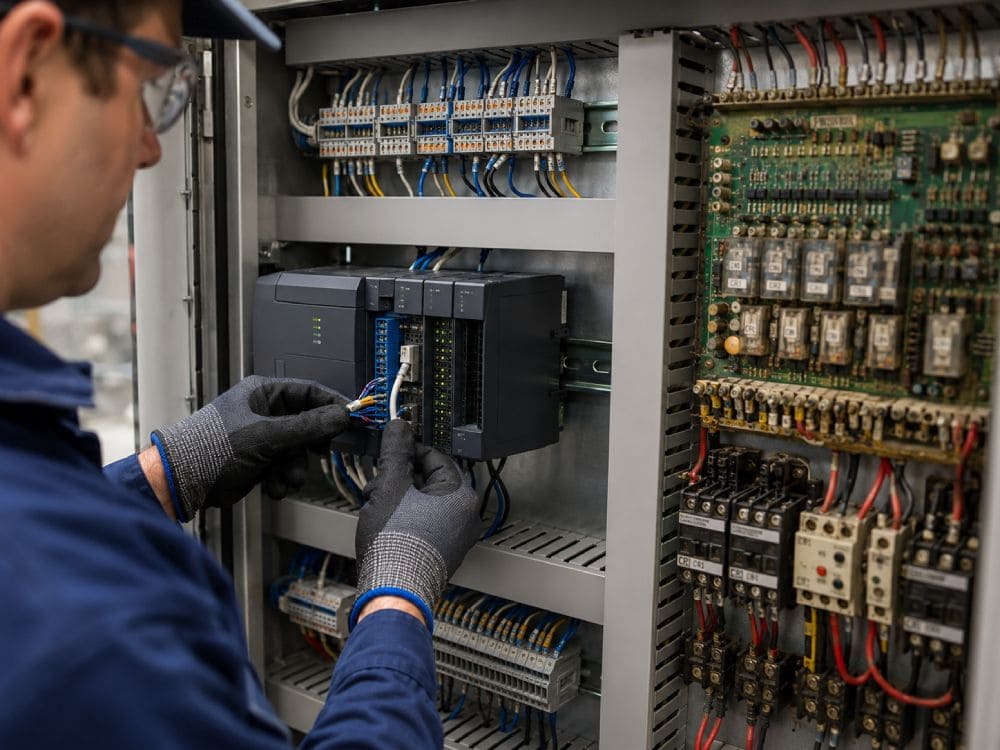
Every liquid packaging operation reaches a point where the filling machine that has been running reliably for years starts showing its age. Downtime gets harder to explain. Spare parts take longer to find. Operators work around problems that used to be simple fixes.
At that point, the question becomes unavoidable: do you invest in refurbishing what you have, or is it time to replace it entirely?
There is no universal answer. The right decision depends on the machine's condition, the cost of keeping it running, what it would take to bring it back to full performance, and whether the current equipment can still meet production demands going forward.
In this article, we'll discuss legacy filling machines, the signs that point toward refurbishment, the signs that point toward replacement, how the two paths compare side by side, and the factors that matter most when making the call. If you're managing an older filling line and trying to figure out the right next step, this guide is for you.
What Is a Legacy Filling Machine?
A legacy filling machine is a piece of liquid packaging equipment that is still in active use but was manufactured or installed well before current technology standards. In practice, most operations consider a filling machine to be legacy equipment once it is 15 to 20 or more years old, though age alone does not tell the full story.
What actually defines a legacy machine is the combination of age, support availability, and capability gaps relative to current production needs.
Common Characteristics of Legacy Filling Equipment
Legacy filling machines typically share several recognizable traits:
- Obsolete or Discontinued Controls: Older programmable logic controllers (PLCs), relay-based control panels, or proprietary interfaces that are no longer supported by the original manufacturer
- Limited Parts Availability: Critical wear components, seals, nozzles, valves, or drive parts that require custom fabrication or extensive searching to source
- Manual or Semi-Manual Operation: Fill cycles that rely on operator involvement or judgment rather than automated systems
- No Integration Capability: Equipment that cannot communicate with downstream machines, scales, labelers, or data systems
- Mechanical Wear that Outpaces Maintenance: Frames, fill heads, pump housings, or structural components that show significant wear, corrosion, or fatigue
Legacy does not mean broken. Many older filling machines still produce acceptable output and have been well maintained over their service life. The issue is that they typically require more effort to keep running, offer fewer capabilities than modern equipment, and may be approaching a point where continued investment no longer makes financial sense.
Understanding where a machine sits on that spectrum is the starting point for making the decision to refurbish or replace.
When to Refurbish a Legacy Filling Machine
Refurbishment is the right path when the core of the machine is still sound and the issues driving underperformance are addressable without a full replacement. A well-executed refurbishment can restore fill accuracy, reduce downtime, extend service life, and improve operator usability at a fraction of the cost of new equipment.
The key is being honest about what refurbishment can and cannot fix. It can address mechanical wear, outdated controls, deteriorated product-contact components, and missing safety features. It cannot change the fundamental design of a machine or add capabilities that were never part of the original architecture.
Signs That Refurbishment Makes Sense
Refurbishment tends to be the right call when:
- The frame and structural components are in good condition. If the base, fill head assembly, and main structural elements are solid and free from significant corrosion, cracking, or fatigue, the machine has a foundation worth restoring.
- Fill accuracy has declined but the fill system itself is intact. Worn seals, degraded nozzles, or a pump that needs rebuilding can often be replaced without touching the rest of the machine. If the fill system is mechanically sound but needs new components, refurbishment is usually cost-effective.
- Controls are outdated but the rest of the machine is functional. Replacing an aging PLC or relay panel with a modern control system can dramatically improve usability, diagnostics, and integration capability without requiring a new machine.
- Spare parts are still available or can be fabricated. If the critical wear items can be sourced or machined, the machine has a viable path forward. Parts availability is one of the clearest indicators of whether refurbishment is practical.
- Production volumes have not significantly increased. If the current machine was sized appropriately for the operation and demand has remained relatively stable, a refurbished version of the same machine may still be the right fit.
- The machine has a strong service history. A filling machine that has been well maintained and has a documented history of reliable performance is a better candidate for refurbishment than one that has been run hard with minimal upkeep.
- The refurbishment cost is well below replacement cost. A general guideline is that refurbishment becomes questionable when the cost approaches 50 to 60 percent of what a comparable replacement would cost.
What a Filling Machine Refurbishment Typically Includes
The scope of a refurbishment depends on the machine's condition, but common elements include:
- Replacement of product-contact components: nozzles, seals, gaskets, valves, and hoses
- Pump rebuild or replacement
- Control system upgrade: new PLC, updated HMI, and revised wiring
- Structural cleaning, surface treatment, and corrosion remediation
- Load cell replacement or recalibration
- Safety feature updates: guarding, emergency stops, and electrical enclosure improvements
- Performance testing and calibration before return to service
A thorough refurbishment by a qualified equipment specialist should result in a machine that meets current fill accuracy requirements, runs reliably, and is easier to support going forward.
When to Replace a Legacy Filling Machine
Replacement becomes the right answer when the machine's limitations are structural, when refurbishment costs approach or exceed the value of a comparable used replacement, or when the current equipment simply cannot support where the operation needs to go.
Holding on to a machine past its practical service life is a common mistake. The costs are real: unplanned downtime, emergency repair bills, operator workarounds, product giveaway from inconsistent fills, and the opportunity cost of a line that cannot keep up with demand. At some point, continuing to invest in an aging machine stops making financial sense.
Signs That Replacement Makes Sense
The following situations typically point toward replacement rather than refurbishment:
- Structural damage or severe corrosion. If the frame, fill head housing, or load-bearing components are compromised, no amount of refurbishment will make the machine safe or reliable long-term.
- Parts are no longer available and cannot be fabricated. When critical components are discontinued and custom fabrication is not practical or cost-effective, the machine has reached the end of its useful life.
- The control system is beyond rescue. Some older machines run on proprietary or discontinued control platforms where no modern replacement path exists. When controls cannot be updated, the machine becomes increasingly difficult to operate, troubleshoot, and integrate.
- Refurbishment costs approach replacement cost. If restoring the machine to reliable working condition would cost nearly as much as a comparable used replacement, replacement is almost always the better investment.
- Production demands have outgrown the machine. If volume has increased significantly, if new products require different fill capabilities, or if the operation needs multi-head filling, higher throughput, or better accuracy than the current machine can provide, refurbishment will not solve the underlying problem.
- The machine is creating recurring compliance or safety concerns. Older equipment may not meet current safety standards, electrical codes, or industry-specific sanitation requirements. When the gap between the machine's design and current requirements is too large to bridge through modification, replacement is the safer path.
- Downtime frequency has become a production management problem. If the maintenance team is spending significant time keeping the machine running rather than maintaining the rest of the line, the machine is costing more than the repair bills suggest.
Replacement does not always mean buying new. A high-quality used filling machine that has been properly inspected, refurbished, and tested can deliver reliable performance at a significantly lower cost than new equipment.
When replacement is the right decision, the goal is to find a machine that fits the current product, container, fill method, and throughput requirements, while leaving room for the operation to grow.
Refurbish vs. Replace: A Side-by-Side Comparison
The table below compares refurbishment and replacement across the factors that matter most when evaluating a legacy filling machine. Use it as a starting framework, not a final answer. Every machine and every operation is different, and the right path depends on a thorough assessment of the specific equipment in question.
|
Factor |
Refurbish |
Replace |
|
Structural condition |
Frame and components are sound |
Frame, housing, or load-bearing parts are compromised |
|
Parts availability |
Critical components can be sourced or fabricated |
Parts are discontinued with no practical fabrication path |
|
Control system |
Outdated but upgradeable to modern PLC/HMI |
Proprietary or discontinued with no viable upgrade path |
|
Fill accuracy |
Restorable through component replacement and calibration |
Fundamental design cannot meet current accuracy requirements |
|
Production volume fit |
Current machine capacity still matches demand |
Demand has grown beyond what the machine can support |
|
Refurbishment cost |
Well below the cost of a comparable replacement |
Approaching or exceeding the cost of a comparable used machine |
|
Downtime frequency |
Manageable; driven by wear rather than design failure |
Frequent and recurring; machine is a chronic production liability |
|
Compliance and safety |
Gaps are addressable through modification |
Gaps are too significant to close through retrofit |
|
Integration needs |
Can be updated to communicate with modern line equipment |
Architecture cannot support integration without full redesign |
|
Best outcome |
Extended service life at lower cost than replacement |
Fresh start with a machine sized and configured for current needs |
No single row makes the decision on its own. A machine with excellent structural condition but no parts availability may still point toward replacement. A machine with outdated controls but a solid frame and available parts is likely a strong refurbishment candidate.
The most useful approach is to evaluate the machine across all of these dimensions, assign weight to the factors that matter most for the specific operation, and look at where the overall picture lands. When most indicators point in the same direction, the decision becomes clearer.
Key Factors to Evaluate Before Making the Decision
The refurbish-or-replace decision is rarely made in isolation. Before committing to either path, manufacturers should work through the following considerations carefully. Skipping any of them can lead to a decision that looks right on paper but creates new problems on the floor.
Total Cost of Ownership, Not Just Repair Cost
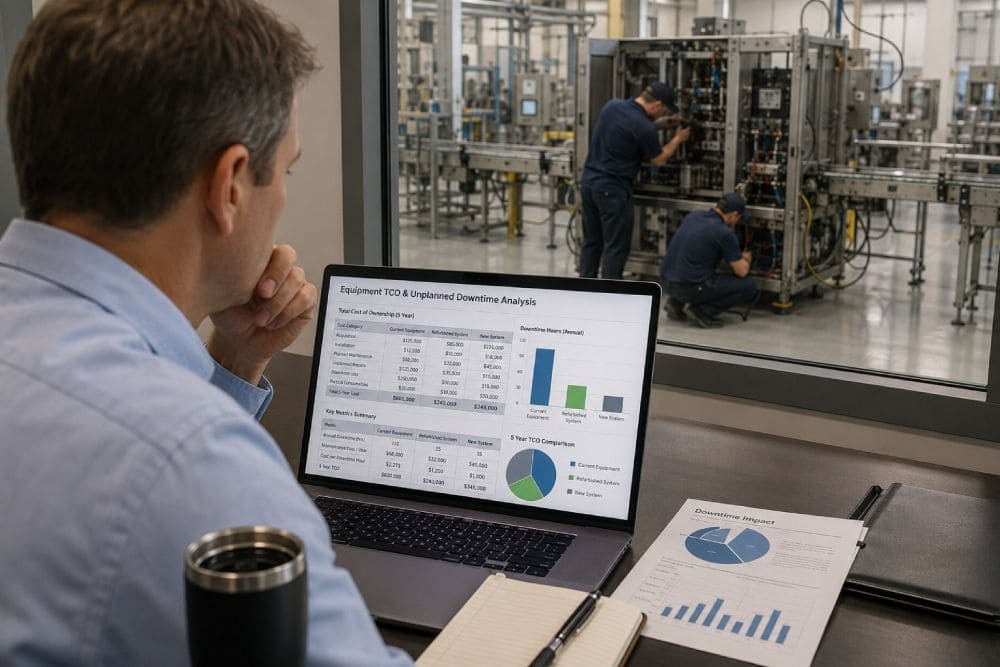
The repair cost for a single incident is rarely the right number to use when evaluating a legacy machine. The more useful calculation is total cost of ownership over the next three to five years, including:
- Estimated maintenance and repair costs based on recent history
- Cost of downtime per hour and projected downtime frequency
- Labor cost associated with working around the machine's limitations
- Product giveaway from fill inaccuracy
- Cost of sourcing hard-to-find parts
When those numbers are added together, the case for refurbishment or replacement becomes clearer than it looks when only the immediate repair cost is on the table.
Parts & Support Availability
Parts availability is one of the most practical factors in the decision. A machine that cannot be supported is a machine that will eventually stop running, regardless of how much is invested in keeping it going.
Before deciding to refurbish, confirm that the critical components are actually available. This means checking with the original equipment manufacturer, identifying alternative suppliers, and understanding whether any custom fabrication would be required.
Current & Future Production Requirements
A refurbished machine will perform at a level consistent with its original design. If production requirements have changed, or are expected to change, that matters.
Consider whether the current machine can support:
- Current and projected fill volumes per shift
- Any new products with different viscosities, particulates, or fill profiles
- Container format changes or new SKUs
- Tighter fill accuracy requirements from customers or regulatory agencies
If the answer to any of these is no, refurbishment may only delay the inevitable. A replacement machine that is sized and configured for where the operation is going will deliver more value over time than a refurbished machine that is already at its limits.
The Role of High-Quality Used Equipment
Replacement does not require a new machine. For many operations, a high-quality used filling machine that has been professionally inspected, refurbished, and tested offers the best combination of performance, cost, and lead time.
Used equipment that has been properly reconditioned can:
- Deliver fill accuracy and reliability comparable to new equipment
- Cost significantly less than new, freeing up capital for integration, controls, or other line improvements
- Be available faster than new equipment with long manufacturing lead times
- Come with a documented service history that helps predict ongoing maintenance needs
The key is working with a supplier who understands the product, the container, and the production environment, and who can confirm that the equipment is compatible before it is installed.
Getting a Qualified Assessment
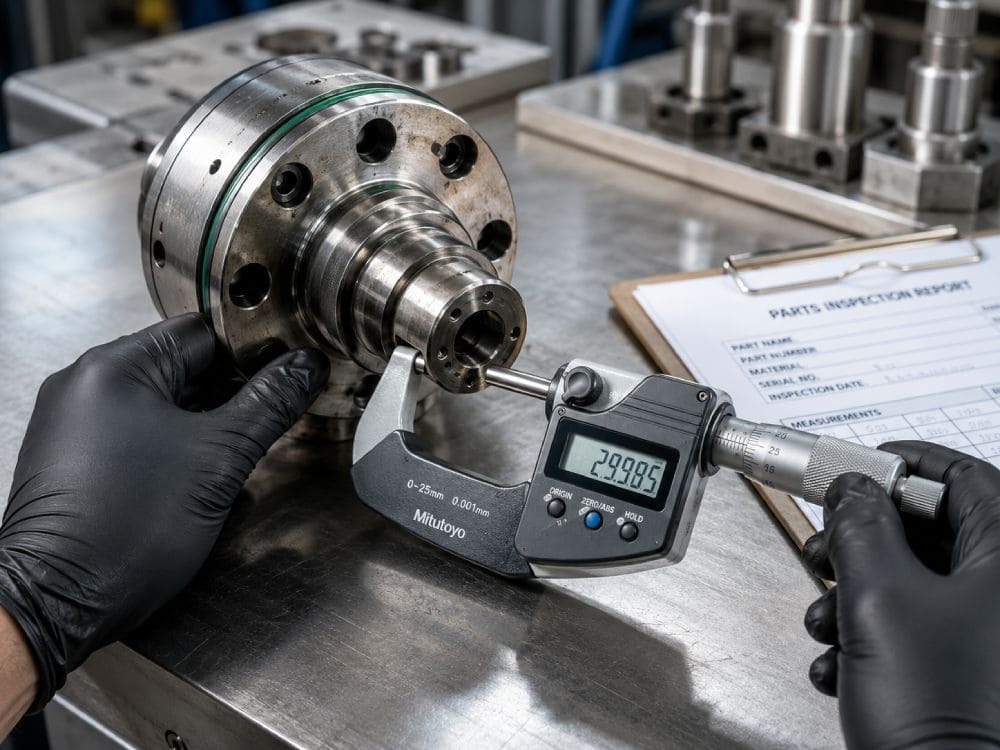
The most important step before making any decision is getting a qualified assessment of the machine from someone with direct experience evaluating liquid filling equipment. A thorough assessment should cover structural condition, controls, product-contact components, parts availability, fill system performance, and safety compliance.
That assessment is what turns a gut feeling about the machine into a defensible, data-driven decision.
Refurbish vs Replace Legacy Filling Machine: FAQs
What Is Considered a Legacy Filling Machine?
A legacy filling machine is generally one that is 15 to 20 or more years old and shows one or more of the following characteristics: outdated or discontinued controls, limited spare parts availability, fill technology that no longer meets current accuracy or throughput requirements, or an inability to integrate with modern line equipment. Age alone does not make a machine legacy; the combination of age, condition, and capability gaps is what matters.
How Do I Know If My Filling Machine Is Worth Refurbishing?
Start with a structural inspection. If the frame, fill head assembly, and main components are in solid condition, the machine may have a viable refurbishment path. Then evaluate parts availability, control system upgrade potential, and what it would cost to bring the machine back to reliable performance. If refurbishment costs are well below the cost of a comparable replacement and the machine can still meet current production requirements after restoration, refurbishment is usually worth pursuing.
What Does a Filling Machine Refurbishment Typically Cost?
Refurbishment costs vary widely depending on the machine's size, condition, and the scope of work required. A basic refurbishment focused on product-contact components and minor controls updates will cost less than a full rebuild that includes structural work, a new PLC, and complete pump replacement. Getting a detailed assessment and scope of work from a qualified equipment specialist is the only reliable way to establish an accurate cost estimate for a specific machine.
When Does Refurbishment Stop Making Financial Sense?
A common guideline is that refurbishment becomes difficult to justify when the cost approaches 50 to 60 percent of what a comparable replacement would cost. At that level, the operation is spending a significant amount of money on a machine that still carries its original age and design limitations, rather than investing in equipment that starts fresh with a clean service history.
What Are the Advantages of Buying a Used Filling Machine Instead of New?
High-quality used filling machines that have been professionally inspected and refurbished can deliver performance comparable to new equipment at a lower capital cost. Used equipment is also typically available faster than new machines. The key is working with a supplier who thoroughly evaluates the equipment, confirms compatibility with the specific product and container, and stands behind the machine's performance.
How Long Can a Filling Machine Last with Proper Maintenance?
Liquid filling equipment can last for 20 to 30 years or longer when properly maintained. The limiting factors are usually parts availability, control system supportability, and whether the machine's design can still meet evolving production requirements. Regular preventive maintenance, timely replacement of wear components, and prompt attention to developing issues are what separate machines that last from machines that fail prematurely.
Get Expert Support for Your Legacy Filling Equipment from Oden Machinery
Deciding whether to refurbish or replace a legacy filling machine is not a decision that should be made based on a repair quote alone. It requires an honest look at the machine's condition, the cost of keeping it running, what it would take to restore it to reliable performance, and whether it can still support the operation's current and future needs.
When the machine has a solid foundation and the issues are addressable, refurbishment is often the most cost-effective path. When the limitations are structural, parts are no longer available, or production demands have moved beyond what the machine was designed to handle, replacement is the right investment.
Either way, the goal is the same: a filling line that runs reliably, fills accurately, and supports the operation without becoming a daily management problem.
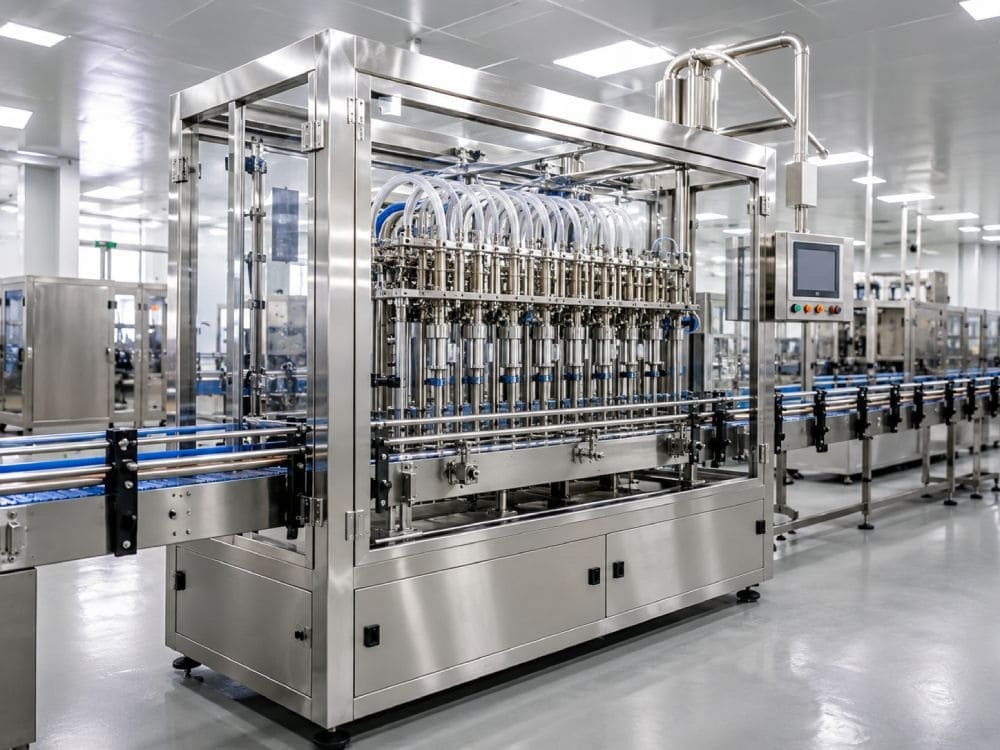
At Oden Machinery, we work with manufacturers to evaluate legacy filling equipment and find the right path forward, whether that means refurbishing what you have, sourcing a replacement, or helping you understand what the decision should look like before any money changes hands. We have the equipment, the experience, and the technical knowledge to support both options.
Whether you are trying to determine if your current machine is worth saving or looking for a replacement that fits your product, container, and production requirements, we have the expertise to help you make the right call.
Contact us today to discuss your equipment and find the right solution for your operation.
