 716.874.3000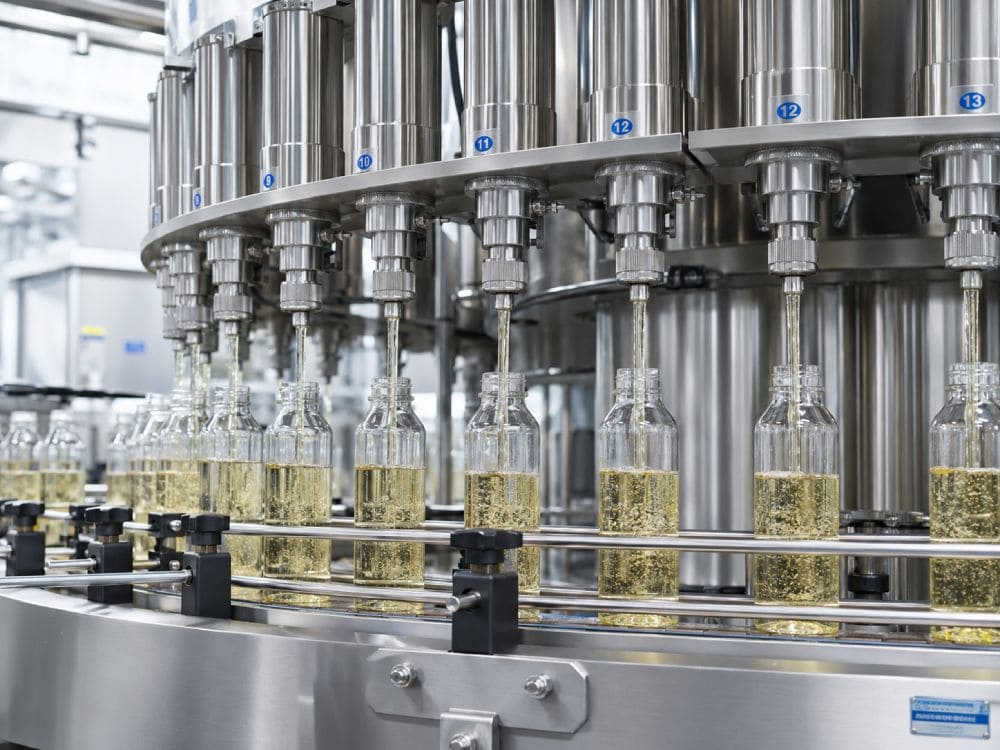
As beverage brands scale, packaging quickly becomes the defining constraint. You can refine formulations, expand distribution, and increase demand, but if your packaging line can’t keep pace, growth stalls.
High-speed packaging lines are built to move thousands of bottles per hour with precision and consistency. In beverage and bottled liquid production, that means maintaining fill accuracy, protecting product quality, and preventing costly downtime while running at elevated speeds. The difference between a line that performs and one that struggles often comes down to thoughtful design decisions made long before installation begins.
Designing a high-speed liquid packaging line requires understanding product characteristics, container specifications, facility layout, automation strategy, and long-term scalability. When these elements work together, manufacturers gain throughput, stability, and predictable performance.
Essential Components of a High-Speed Packaging Line
A high-speed beverage packaging line is a coordinated system of machines that must operate in harmony. Each component contributes to overall throughput, and even minor mismatches can create bottlenecks.
Liquid Filling System
The liquid filler is the heart of the line. Its speed and precision largely determine overall capacity.
Common filling technologies include gravity fillers, piston fillers, overflow fillers, pressure fillers, and vacuum systems. The right machine choice depends on factors such as viscosity, foaming tendencies, carbonation, and temperature requirements. For example, carbonated beverages often require pressure filling systems designed to handle dissolved gases, while thicker liquids may require piston-based systems.
High-speed fillers typically feature multiple heads operating simultaneously. Accuracy at elevated speeds is critical; even small deviations in fill level can lead to product giveaway, regulatory issues, or consumer dissatisfaction. Selecting a filler designed for the specific product profile is foundational to line performance.
Container Handling & Infeed Systems
Before a bottle reaches the filler, it must be properly oriented and conveyed.
Bottle unscramblers feed containers onto the line at consistent intervals. There are several types of conveyors as well, with air conveyors commonly used for lightweight PET bottles and belt conveyors more suitable for heavier or uniquely shaped containers.
Smooth container flow at the infeed stage prevents disruptions downstream. When bottles bunch, tip, or misalign, high-speed systems can quickly amplify minor issues into major stoppages.
Capping & Sealing Equipment
After filling, containers move directly to capping or sealing equipment. Spindle cappers, chuck cappers, snap cappers, and roll-on pilfer-proof (ROPP) cappers each serve different closure types.
At high speeds, torque control becomes especially important. Too little torque can cause leaks, and too much can damage closures or distort threads. Integrated controls between the filler and capper help maintain synchronization and reduce the risk of misfeeds.
Labeling Systems
Labeling at high speeds introduces its own complexities. Pressure-sensitive labelers, wrap-around systems, shrink sleeve applicators, and print-and-apply units must maintain accuracy while operating at elevated throughput.
Bottle shape also plays a significant role here. Irregular surfaces or tapered designs require specialized handling to maintain consistent label placement.
Inspection & Quality Control Systems
High-speed lines require automated inspection, and manual checks simply can’t keep up. There are different solutions for automatic quality control on liquid packaging lines. For example:
- Vision systems verify fill levels, cap placement, and label alignment.
- Torque testers confirm closure integrity.
- Reject systems remove nonconforming containers without stopping the line.
In beverage production, these safeguards help protect brand reputation while minimizing rework.
Secondary Packaging & End-of-Line Systems
Once bottles are filled, capped, and labeled, secondary packaging takes over. Case packers, shrink bundlers, tray formers, palletizers, and stretch wrappers prepare products for distribution. These systems must match or exceed upstream speed. If end-of-line equipment lags behind, the entire system slows.
Designing this portion of the line with adequate accumulation and buffering helps maintain consistent flow.
Key Design Considerations for a High-Speed Packaging Line
Selecting equipment is only one part of the equation. A high-speed packaging line succeeds or struggles based on how well every variable is evaluated before installation begins. The following design considerations influence how the system performs under real production pressure.
Target Throughput & Line Speed
Start with clear bottles-per-minute (BPM) targets. A line designed for 300 BPM differs significantly from one designed for 80 BPM.
However, theoretical maximum speed is not the same as practical operating speed. Realistic calculations should account for container type, product behavior, changeover frequency, and maintenance intervals. A well-designed line balances speed with reliability.
Product Characteristics
Beverages and bottled liquids vary widely:
- Water flows differently than syrup.
- Carbonated drinks behave differently than still beverages.
- Viscosity, foaming, particulate content, temperature, and sanitation requirements all influence machine configuration.
- Hot-fill applications may require specialized materials and cooling considerations.
- Washdown environments demand corrosion-resistant components.
Design decisions rooted in product behavior reduce long-term performance issues.
Container & Closure Specifications
Bottle material and geometry affect stability at high speeds. For example, lightweight polyethylene terephthalate (PET) containers may require air handling systems to prevent tipping, and glass bottles demand careful transfer mechanisms to avoid breakage.
Closure type also influences capper selection and torque parameters. Minor differences in thread design can significantly affect performance at scale.
Line Layout & Facility Constraints
Floor space often dictates layout strategy. Straight-line configurations simplify flow, while U-shaped layouts may improve space utilization and operator access. Maintenance clearance, operator walkways, and access to utilities should be considered early in the design phase, as crowded installations create long-term service challenges.
Automation & Controls
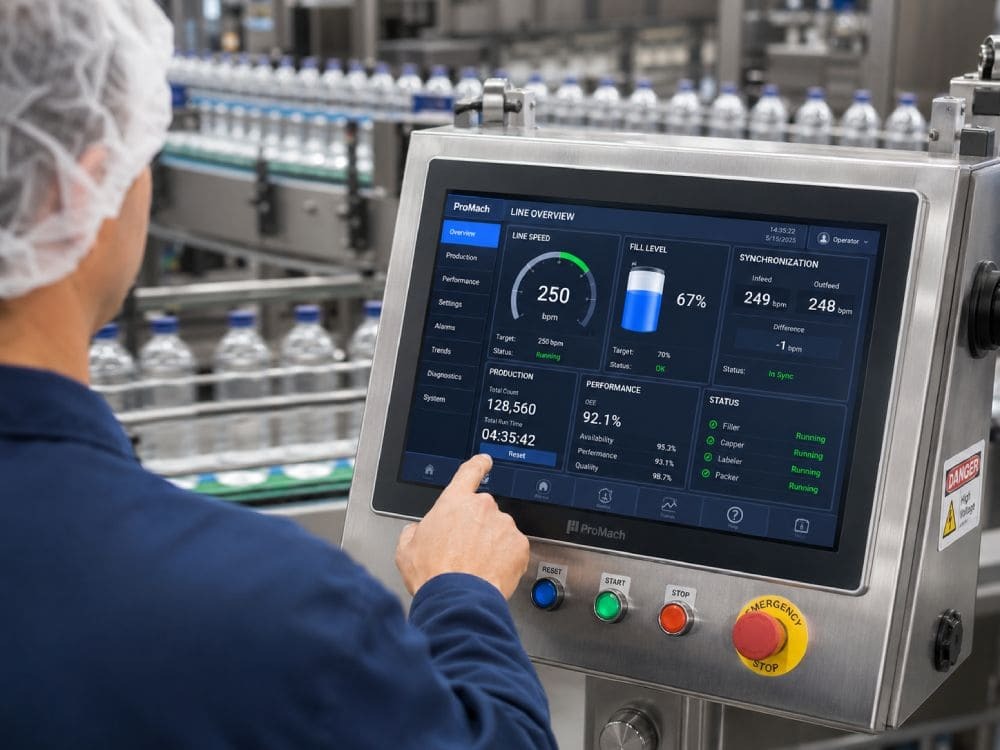
Modern high-speed lines rely on integrated programmable logic controller (PLC) systems. Communication between machines allows speed synchronization and real-time adjustments, and advanced data tracking enables operators to monitor output, downtime, and overall equipment effectiveness. With this visibility, teams can quickly identify recurring issues and make data-driven improvements.
Scalability & Flexibility
Many beverage producers introduce new stock keeping units (SKUs) over time. A line built for one bottle size may struggle with another if flexibility is not considered. Fortunately, quick changeover features, modular components, and adjustable guides support evolving product lines without requiring complete system replacement.
Budget & ROI Considerations
Capital investment in high-speed equipment can be substantial. New machinery offers the latest technology, but high-quality used equipment often delivers comparable performance at a fraction of the cost.
For many manufacturers, strategically sourcing refurbished or well-maintained used liquid packaging machines creates a practical path to expansion without overextending capital resources.
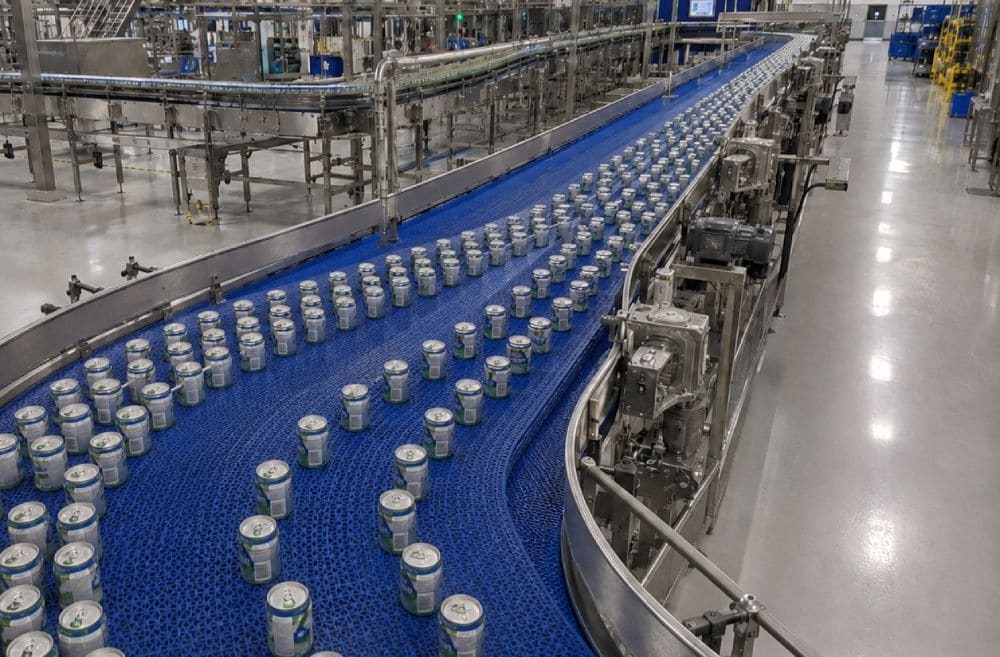
How to Build a High-Speed Packaging Line: 7 Steps to Follow
Designing a high-speed packaging line on paper is one thing, but bringing it to life inside a production facility is another. Follow these steps to learn how to translate production goals into a functioning, high-performance packaging system.
Step 1: Define Production Goals & Requirements
Start with clarity. Determine target BPM, annual volume projections, shift patterns, and anticipated growth over the next three to five years. Identify all product variations including bottle sizes, closure types, and labeling formats.
Regulatory requirements should also be documented at this stage, particularly for food and beverage applications that involve sanitation standards, traceability, or hot-fill processing. The more detailed this planning phase is, the more precise equipment selection becomes.
Step 2: Evaluate Existing Equipment & Gaps
If upgrading an existing operation, conduct a thorough audit of current machinery. Evaluate age, mechanical condition, speed capabilities, and compatibility with future throughput goals. Some components may be suitable for refurbishment or integration into the new line. Others may limit performance. Identifying bottlenecks early, such as undersized conveyors or outdated cappers, prevents unnecessary investment in equipment that cannot support long-term objectives.
Step 3: Select Core Equipment
The filler typically anchors the entire system. Its speed, filling technology, and configuration determine the pace of the line. Then, once the filler is selected, you can choose a capper capable of matching or exceeding that output.
From there, downstream systems such as labelers, inspection units, and case packers should be evaluated based on their ability to maintain continuous flow. Accumulation tables or buffer zones may be incorporated to reduce the impact of short stoppages. Equipment compatibility, electrical requirements, and control integration should be confirmed before finalizing purchases.
For many manufacturers, sourcing high-quality used liquid packaging equipment at this stage can significantly reduce capital expenditure while still meeting performance targets. Proper inspection and evaluation of used machinery are essential to confirm condition and remaining service life.
Step 4: Design Line Layout & Flow
A well-planned layout reduces congestion and simplifies troubleshooting once the line is operational.
Translate equipment selections into a physical layout that supports efficient movement. Map container flow from infeed through palletizing, minimizing unnecessary turns or tight transfer points that can cause instability at high speeds. Consider operator access, maintenance clearance, and safety zones. Provide adequate space around major components for service access, and plan utility connections such as compressed air, electrical supply, and water lines with future expansion in mind.
Step 5: Plan Integration & Controls
Modern high-speed lines depend on synchronized communication between machines. Develop a centralized control architecture that allows upstream and downstream equipment to adjust speed dynamically. Integrate sensors, vision systems, reject mechanisms, and data collection tools into a unified platform. This integration allows operators to monitor line performance in real time and respond quickly to deviations.
Clearly defined control logic prevents cascading shutdowns when minor interruptions occur.
Step 6: Install, Test, & Optimize
Installation should follow a structured commissioning plan. Begin with mechanical alignment and dry cycling to verify movement and timing without product.
Once mechanical systems operate correctly, introduce product during controlled wet runs. Observe fill accuracy, cap torque, label placement, and container stability at incremental speed increases. Adjust machine settings gradually until target throughput is achieved.
Operator training during this phase is critical. Teams should understand not only how to run the equipment but also how to identify early warning signs of performance drift.
Step 7: Implement Maintenance & Continuous Improvement Strategies
After launch, shift focus to stability and refinement. Develop a preventive maintenance program tailored to operating speed and production volume, and schedule regular inspections of wear components such as belts, seals, and bearings. Track key performance indicators including downtime frequency, mean time between failures, and overall equipment effectiveness. Review this data regularly to identify recurring patterns.
Continuous improvement efforts may involve fine-tuning changeover procedures, upgrading specific components, or incorporating additional automation over time. Regardless, high-speed packaging lines achieve their best results when treated as evolving systems rather than static installations.
FAQs About High-Speed Packaging Lines
What Qualifies as a High-Speed Packaging Line for Beverages?
A high-speed packaging line typically refers to a system designed to run at elevated bottles-per-minute rates, often 150 BPM and higher, depending on the product and container type. In beverage production, high-speed operations must maintain fill accuracy, cap integrity, and label placement while operating continuously at those higher outputs.
How Do You Determine the Right Speed for a High-Speed Packaging Line?
The appropriate speed depends on annual production goals, shift schedules, product variations, and container specifications. Rather than focusing only on maximum rated speed, manufacturers should evaluate sustainable operating speed under real-world conditions, including changeovers and maintenance intervals.
Can Used Equipment Support a High-Speed Packaging Line?
Yes. High-quality used liquid packaging machines, when properly inspected and maintained, can perform at competitive speeds and deliver reliable output. Many manufacturers choose used equipment to reduce capital investment while still achieving strong production capacity.
What Is the Most Important Machine in a High-Speed Packaging Line?
The filler typically anchors the line because it dictates output rate and influences downstream synchronization. However, performance depends on how well all machines—cappers, labelers, conveyors, and end-of-line equipment—work together as a coordinated system.
How Do You Prevent Bottlenecks in a High-Speed Packaging Line?
Bottlenecks are avoided through balanced equipment selection, proper accumulation zones, and integrated controls that synchronize machine speeds. Regular performance monitoring also helps identify recurring slow points before they disrupt overall production.
How Long Does It Take to Design & Install a High-Speed Packaging Line?
Timelines vary based on line complexity, facility readiness, and equipment sourcing. A well-planned project may take several months from initial planning to full commissioning, particularly if customization, integration, or facility modifications are required.
How Does Carbonation Affect a High-Speed Packaging Line Design?
Carbonated beverages require specialized filling systems that operate under pressure to control foam and retain dissolved CO2. Equipment must be engineered to handle pressure differentials, and line timing must account for stabilization after filling to prevent overflow or inconsistent fill levels.
What Challenges Do Lightweight PET Bottles Create at High Speeds?
Lightweight PET bottles can be unstable when conveyed at elevated speeds. Air conveyors, side-grip systems, and carefully designed transfer points help maintain bottle control. Proper guide rail adjustment and line pressure management are also important to prevent tipping and jams.
How Do Hot-Fill Beverages Impact Packaging Line Configuration?
Hot-fill applications introduce additional considerations such as heat-resistant components, cooling tunnels, and bottle material compatibility. Line layout may need to accommodate cooling stages before labeling or secondary packaging to protect both product quality and packaging integrity.
Can One High-Speed Packaging Line Handle Multiple Beverage SKUs?
Yes, but flexibility must be built into the design. Adjustable guides, quick-change parts, programmable controls, and modular labeling systems allow manufacturers to switch between bottle sizes and product variations with minimal downtime.
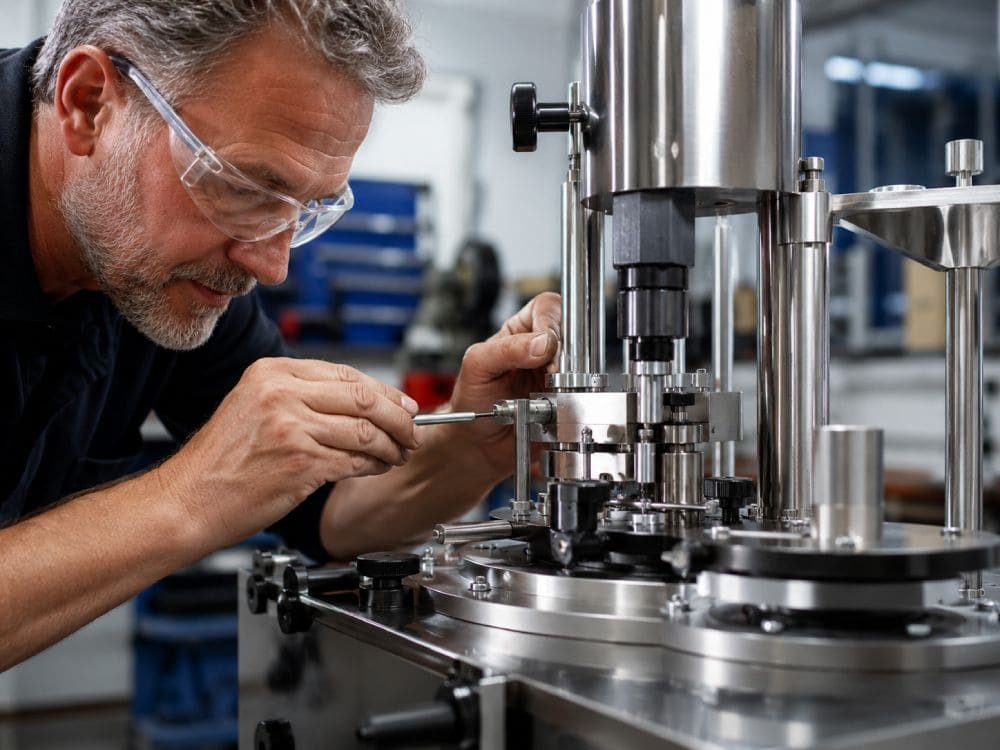
Choose Oden Machinery for Trusted, High-Quality Used Liquid Packaging Equipment
Designing a high-speed packaging line for beverages and bottled liquids demands careful coordination of equipment, layout, automation, and long-term planning. When every component is selected with product behavior and throughput goals in mind, manufacturers gain reliable performance and sustainable growth capacity.
For companies looking to expand or upgrade their liquid packaging capabilities, sourcing high-quality used machinery can offer significant value. With the right partner, used equipment delivers speed, durability, and cost efficiency without compromising performance.
At Oden Machinery, we specialize in supplying high-quality used liquid packaging equipment and helping manufacturers build high-speed lines that meet demanding production goals while optimizing capital investment. Every machine is thoroughly inspected, refurbished, and supported with expert service to ensure your production line operates smoothly and efficiently.
Whether you’re scaling an existing operation or designing a new line from the ground up, we can help you identify the right equipment to support your success.
Contact us today to learn more about our available inventory of used liquid packaging equipment and find the perfect solution for your operation.
