 716.874.3000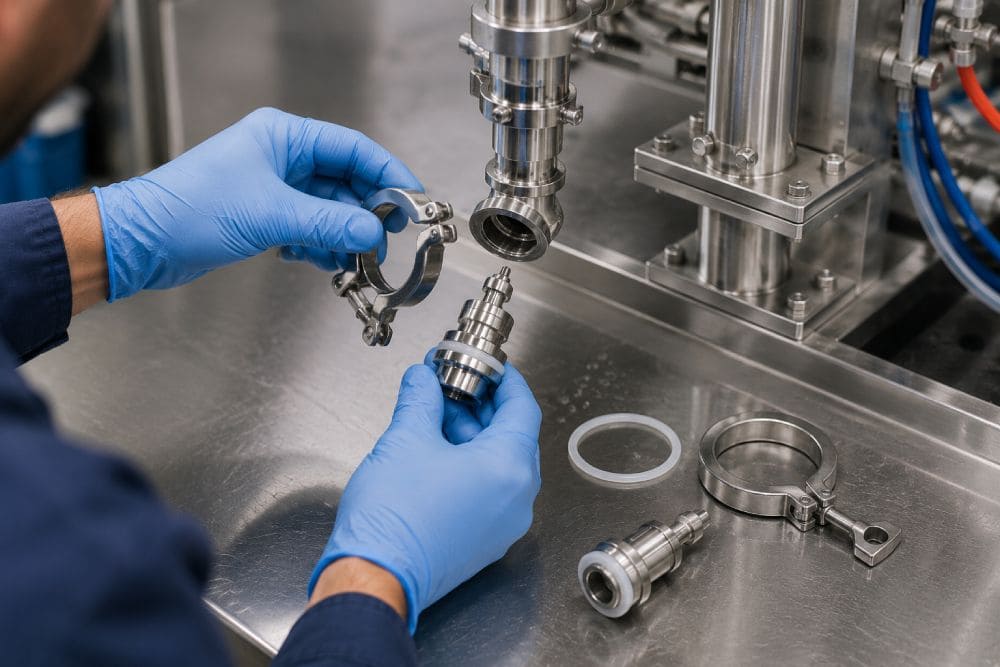
Cleaning and sanitation do not get as much attention as fill speed or accuracy, but they have a direct impact on both. In small-batch filling operations where product changeovers happen frequently and batch sizes are smaller, the time spent cleaning between runs can represent a significant portion of the production day.
Get the sanitation process right and the line runs cleaner, changes over faster, and produces more consistent output. Get it wrong and the problems compound quickly: cross-contamination between products, residue buildup that affects fill accuracy, compliance issues, and equipment wear that shortens the life of pumps, nozzles, and seals.
In this guide, we will cover what drives cleaning and sanitation requirements in small-batch filling, how to approach the process based on product type and equipment design, the difference between clean-in-place and manual cleaning, and the practical steps that help operations build a more consistent, efficient sanitation routine.
In this guide:
- Why Cleaning & Sanitation Matter in Small-Batch Filling
- What Affects Cleaning Requirements
- Manual Cleaning vs. Clean-in-Place (CIP): How They Compare
- Key Steps in a Small-Batch Filling Sanitation Process
- FAQs
Why Cleaning & Sanitation Matter in Small-Batch Filling
Small-batch filling operations tend to run more products through the same equipment than high-volume dedicated lines. That variety is often a competitive advantage, but it also means the filler, pump, hoses, nozzles, and product-contact components see a wider range of materials over the course of a week.
Every time the product changes, there is potential for residue from the previous run to carry over into the next. In some cases, that carryover is a quality issue. In others, it is a safety or compliance issue. And in almost every case, it affects the cleanliness of the fill, the accuracy of the output, and the condition of the equipment over time.
The cost of poor sanitation shows up in several ways:
- Product contamination or cross-contamination between batches
- Residue buildup inside pumps, nozzles, hoses, and valves that degrades fill accuracy
- Premature wear on seals, gaskets, and product-contact components
- Failed inspections or compliance issues in regulated industries
- Longer-than-necessary downtime during changeovers because the cleaning process is inconsistent or not well-defined
For operations filling food-grade products, pharmaceuticals, personal care formulations, or regulated chemicals, the stakes are higher. But even in less regulated environments, poor sanitation practices create production problems that compound over time.
The good news is that sanitation in small-batch filling is manageable when the right process is in place and the equipment is designed with cleanability in mind.
What Affects Cleaning Requirements in Small-Batch Filling
Not every product requires the same level of cleaning effort, and not every operation has the same risk profile. Understanding what drives cleaning requirements helps operators build a sanitation process that is thorough without being unnecessarily time-consuming.
Product Characteristics
The product itself is the starting point. Some liquids rinse out of equipment quickly with water. Others leave residue that requires specific solvents, elevated temperature, or scrubbing to remove completely.
Key product characteristics that affect cleaning requirements include:
- Viscosity: Thick, high-viscosity products like adhesives, coatings, gels, and heavy syrups leave more residue in pumps, hoses, and nozzles than thin, free-flowing liquids. They may require longer flush cycles, heated rinse water, or solvent-based cleaning agents.
- Pigmentation or color: Pigmented products, dyes, and colorants can stain product-contact surfaces and require more thorough cleaning to prevent carryover into the next batch, especially when switching from a dark to a light product.
- Foaming behavior: Products that foam during filling can also foam during cleaning, which complicates rinsing and may require defoaming agents or specific rinse protocols.
- Chemical aggressiveness: Acidic, alkaline, solvent-based, or oxidizing products may react with certain materials and require compatible cleaning agents and careful handling.
- Allergen content: Food-grade operations filling products with allergens such as nuts, dairy, or gluten require validated cleaning procedures that confirm allergen removal before the next run.
- Microbial sensitivity: Products that support microbial growth, including food and beverage formulations, require sanitation steps beyond simple cleaning to eliminate bacteria, mold, or yeast.
- Particulates: Products with suspended solids, seeds, pulp, or abrasive particles can accumulate in low-flow areas of the product path and require more thorough flushing.
Regulatory Environment
The industry and the product determine what cleaning standards apply. Food and beverage operations may follow FDA food safety regulations or third-party audit standards. Pharmaceutical and nutraceutical operations often follow current Good Manufacturing Practices (cGMP). Cosmetic and personal care manufacturers may follow similar standards depending on the market.
In regulated environments, cleaning is not just a production concern. It is a documented process that must be validated and traceable.
Changeover Frequency
Operations that switch products multiple times per shift have less tolerance for slow or inconsistent cleaning. Every minute spent cleaning is a minute not filling. The more frequently the line changes over, the more important it is to have a cleaning process that is fast, repeatable, and effective.
Equipment Design
How easy the equipment is to clean has as much to do with the outcome as the cleaning agent or the procedure. Equipment with accessible product-contact surfaces, sanitary fittings, smooth internal pathways, and quick-disconnect components is faster and easier to clean than equipment designed without cleanability in mind.
Manual Cleaning vs. Clean-in-Place (CIP): How They Compare
The two primary approaches to cleaning filling equipment are manual cleaning and clean-in-place (CIP). Each has a different place in small-batch operations, and understanding the difference helps operations choose the right approach for their product, equipment, and production schedule.
|
Factor |
Manual Cleaning |
Clean-in-Place (CIP) |
|
How it works |
Operator disassembles product-contact components and cleans by hand or with brushes and rinse water |
Cleaning solution is circulated through the product path without disassembly |
|
Equipment required |
Basic tools, brushes, sinks, cleaning agents |
CIP skid or integrated CIP system with tanks, pumps, and controls |
|
Cleaning effectiveness |
Depends on operator technique and thoroughness |
Highly repeatable when properly designed and validated |
|
Time required |
Variable; depends on operator and complexity of disassembly |
Faster for routine changeovers once the system is established |
|
Best fit |
Lower-volume operations, simple product paths, infrequent changeovers |
Higher-frequency changeovers, regulated industries, complex product paths |
|
Documentation |
Manual logs |
Can be automated and logged through the control system |
|
Capital cost |
Lower |
Higher upfront investment |
|
Operator dependency |
High |
Low once programmed |
When Manual Cleaning Makes Sense
Manual cleaning is a practical approach for many small-batch operations, particularly those running lower volumes, filling a limited number of products, or working with equipment that is straightforward to disassemble and clean.
Manual cleaning works well when:
- The product path is simple and accessible
- Changeovers happen infrequently
- The products being filled are not highly regulated or allergen-sensitive
- The operation does not yet justify the capital investment in a CIP system
The main risk with manual cleaning is inconsistency. Results depend heavily on the operator, the procedure, and the time available. Without a documented, step-by-step cleaning protocol, different operators may clean the same equipment differently, which creates variability in sanitation outcomes.
When CIP Makes Sense
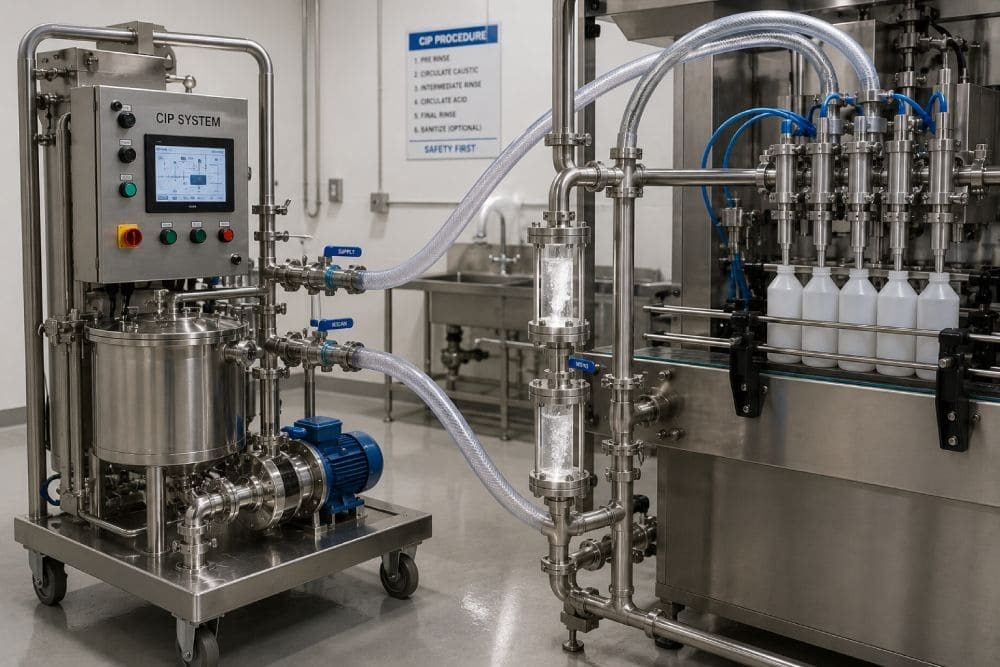
Clean-in-place systems are designed to circulate water, cleaning agents, and sanitizing solutions through the product path without requiring full disassembly. They are particularly valuable in operations that change over frequently, fill regulated products, or need documented proof of sanitation.
CIP systems are worth evaluating when:
- Changeovers happen multiple times per shift
- The products being filled are food-grade, pharmaceutical, or allergen-sensitive
- Regulatory compliance requires documented and validated cleaning
- Manual cleaning is creating inconsistent results or taking too long
For small-batch operations that are growing and adding more SKUs, CIP capability is often worth building into the equipment selection process from the beginning. Retrofitting a CIP system onto equipment that was not designed for it can be difficult and expensive. This is one of the reasons equipment selection and cleaning requirements should be evaluated together, not separately.
Key Steps in a Small-Batch Filling Sanitation Process
A sanitation process for small-batch filling does not need to be complicated, but it does need to be consistent. The following steps reflect a general framework that applies to most liquid filling operations. The specific cleaning agents, temperatures, contact times, and verification methods will vary based on the product, the equipment, and the applicable regulatory requirements.
Step 1: Drain & Remove Remaining Product
Before any cleaning begins, the product path needs to be emptied. This means draining the supply tank or hose, running the pump until the product path is clear, and removing any pooled liquid from the filler, nozzle, or associated components.
Removing as much product as possible before introducing water or cleaning solution reduces dilution, minimizes waste, and makes the subsequent cleaning steps more effective.
Step 2: Pre-Rinse
A pre-rinse with warm or hot water helps flush out residual product before the cleaning agent is introduced. This step is especially important for products that are water-soluble, foamy, or prone to gelling when they cool.
The pre-rinse should cover the full product path, including the supply hose, pump, valves, fill head, and nozzle. For manual cleaning setups, this may involve running water through the system and then disassembling components for individual rinsing.
Step 3: Clean with Appropriate Cleaning Agent
The cleaning agent must be matched to the product. Water-based products often clean well with alkaline detergents. Solvent-based products may require specific solvents or co-solvents. Oily or fatty products may need a degreaser. Pigmented or heavily residue-forming products may require longer contact time or mechanical agitation.
Important considerations when selecting a cleaning agent:
- Compatibility with product-contact materials
- Compatibility with the product residue being removed
- Regulatory acceptability for the industry
- Rinse requirements after the cleaning agent is applied
Step 4: Rinse Thoroughly
After the cleaning agent has done its work, a thorough rinse is needed to remove all traces of the cleaning solution from the product path. Residual cleaning agents can affect the next product, create compliance issues, or damage equipment components over time.
The rinse step should use water of appropriate quality for the application. Food-grade and pharmaceutical operations often specify potable water or purified water for final rinses.
Step 5: Sanitize
For operations filling food-grade, pharmaceutical, or microbiologically sensitive products, cleaning alone is not enough. A sanitization step is needed to reduce microbial load to acceptable levels.
Sanitizers commonly used in liquid filling operations include:
- Heat (hot water or steam at defined temperature and contact time)
- Chemical sanitizers
- UV treatment in some specialized applications
The sanitizer must be appropriate for the product, the equipment materials, and the regulatory framework that applies to the operation.
Step 6: Inspect & Verify
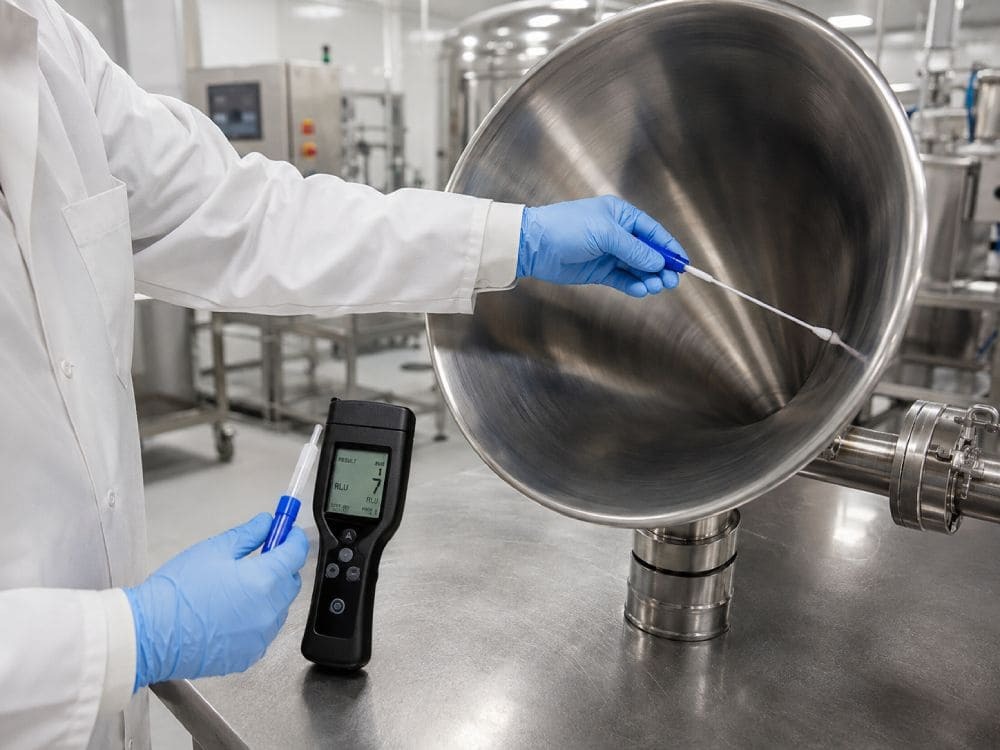
Before the next run begins, the cleaned and sanitized equipment should be inspected to confirm that the process was effective. This may involve visual inspection of product-contact surfaces, swab testing, or rinse sampling, depending on the product and the regulatory environment.
In regulated industries, this step is often documented and tied to a batch record or cleaning log. Even in less regulated operations, a basic inspection step helps catch issues before they affect the next batch.
Step 7: Document the Process
Consistent documentation of cleaning activities supports traceability, helps identify patterns when problems occur, and is often required for compliance. At minimum, a cleaning log should capture the date, the products involved, the cleaning agents used, the operator who performed the cleaning, and any observations or issues noted during the process.
FAQs About Cleaning & Sanitation for Small-Batch Filling
What Is the Difference Between Cleaning and Sanitation in Filling Operations?
Cleaning removes visible product residue, soils, and contaminants from equipment surfaces. Sanitation reduces microbial load to safe levels. Both steps are necessary in food-grade, pharmaceutical, and other regulated applications, and they work together. Cleaning must happen first, because sanitizers are less effective on surfaces that still have product residue present.
How Often Should Filling Equipment Be Cleaned in a Small-Batch Operation?
Cleaning frequency depends on the products being filled, the risk of cross-contamination, and regulatory requirements. At minimum, equipment should be cleaned at every product changeover. Some operations also perform mid-shift cleaning when running the same product for extended periods, particularly when the product is heat-sensitive, prone to microbial growth, or highly viscous.
What Cleaning Agents Are Safe to Use on Filling Equipment?
The right cleaning agent depends on the product residue being removed, the equipment materials, and the regulatory environment. All cleaning agents should be confirmed as compatible with the equipment's product-contact materials before use.
Does Small-Batch Filling Equipment Need to Be CIP-Compatible?
Not always. Many small-batch operations clean effectively through manual disassembly and cleaning of product-contact components. CIP compatibility becomes more important as changeover frequency increases, as regulatory requirements for documented cleaning become more stringent, or as the complexity of the product path makes manual cleaning less practical.
Can Cleaning Damage Filling Equipment Over Time?
Improper cleaning can accelerate equipment wear. Using cleaning agents that are incompatible with equipment materials, using excessive temperature, or using abrasive tools on polished surfaces can degrade seals, corrode metal components, and damage product-contact surfaces. Following the equipment manufacturer's recommendations for compatible cleaning agents and methods protects the equipment while maintaining sanitation effectiveness.
How Does Product Viscosity Affect Cleaning Difficulty?
Thicker, more viscous products are generally harder to clean than thin, free-flowing liquids. They leave more residue in pumps, hoses, and nozzles, and that residue may require heated cleaning solutions, longer contact times, or mechanical action to remove. Operations filling high-viscosity products should plan for longer cleaning cycles and select equipment with product paths that are designed to drain and clean effectively.
What Should I Look for in Filling Equipment to Make Cleaning Easier?
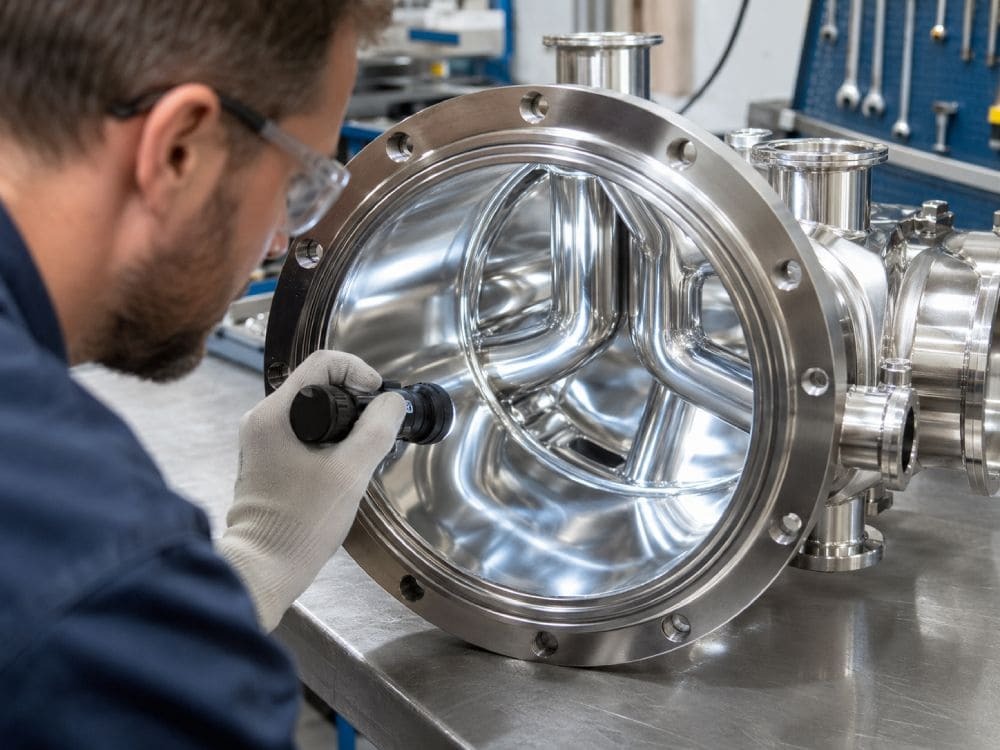
Key features that improve cleanability include sanitary construction materials (typically stainless steel with compatible elastomers), smooth internal surfaces without crevices or dead legs, quick-disconnect fittings for fast disassembly, tool-free nozzle and fill head removal, fully drainable product paths, and CIP compatibility if needed. These features reduce cleaning time and produce more consistent sanitation results across operators and shifts.
Choose Oden Machinery for Trusted, High-Quality Liquid Packaging Equipment
Cleaning and sanitation in small-batch filling are not afterthoughts. They are part of the production process, and they deserve the same planning attention as fill speed, accuracy, and changeover. The operations that handle sanitation well tend to run more consistently, change over faster, produce fewer rejects, and have fewer compliance problems over time.
The right starting point is understanding what the product requires, choosing equipment that is designed to be cleaned efficiently, and building a documented process that every operator can follow the same way every time.
If your current filling setup is making sanitation harder than it should be, whether because the equipment is difficult to disassemble, the product path does not drain well, or cleaning time is cutting into available production time, it may be worth evaluating whether the equipment is the right fit for the operation.
At Oden Machinery, we specialize in supplying liquid packaging equipment that meets the highest standards of quality, performance, and reliability. Whether you are looking for a single filler with sanitary design features or a more complete small-batch filling setup, we have the equipment and the expertise to help you find the right match.
Contact us today to learn more about our liquid packaging equipment and find the right solution for your operation.
