 716.874.3000
13 Business Benefits of Automated Liquid Packaging Systems
Manufacturers handling liquid products know that packaging is one of the most important steps in production. It influences speed, cost, product quality, and the overall customer experience.
As demand grows and competition rises, many companies find that manual or semi-automatic processes become limiting. Automated liquid packaging systems offer a more scalable and dependable way to handle filling, capping, sealing, and labeling with higher speed and consistency.
How Automated Liquid Packaging Systems Work
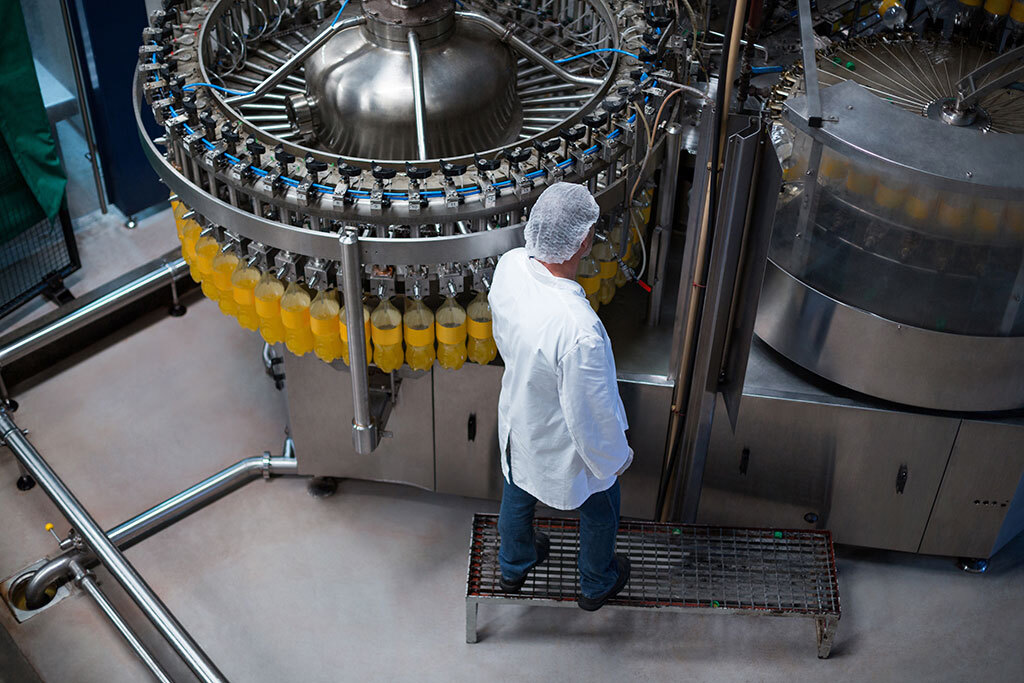
Automated liquid packaging systems operate as fully integrated production lines designed to move containers through every stage of the packaging process with speed, accuracy, and minimal operator involvement. Instead of relying on several disconnected manual steps, automation links each part of the process together so containers travel smoothly from filling to sealing to labeling in a controlled, continuous flow. This process creates a predictable production rhythm that supports higher output and uniform product quality.
Common components include the following:
-
Liquid filling machines that deliver precise volumes across a wide range of viscosities
-
Capping machines that secure caps or lids consistently, reducing leaks and product loss
-
Labelers that apply branding and compliance labels without misalignment
-
Conveyors that transfer containers between stations in a synchronized sequence
Sensors and programmable logic controllers (PLCs) manage timing, monitor fill levels, and coordinate communication between machines. As a result, critical tasks happen in the correct order and at the correct speed, with adjustments made automatically as needed.
Beyond stabilizing production, this level of coordination helps manufacturers improve traceability, streamline quality checks, and gather real-time performance data that supports better long-term planning.
13 Benefits of Automated Liquid Packaging
Automated liquid packaging provides advantages that reach far beyond simple speed improvements. When a production line becomes automated, manufacturers gain a more controlled, predictable, and scalable operation. The result is a system that produces higher-quality products at a lower cost while reducing risk and creating room for growth.
Each of the following benefits plays a major role in helping manufacturers stay competitive.
1. Higher Output
Automated systems drastically increase the volume of containers a facility can fill, cap, and package in a given timeframe. Unlike manual processes that slow down as workers fatigue, automated equipment maintains a steady pace throughout every shift, which gives manufacturers the ability to meet larger orders, respond to new opportunities, and support faster turnaround times without compromising quality. High-speed fillers and continuous-motion systems are especially valuable for businesses handling large stock keeping units (SKUs) or operating in high-demand industries.
Beyond raw speed, higher output also means more predictable planning. When output becomes consistent, manufacturers can better forecast inventory, align production with sales demand, and minimize the risks associated with fluctuating manual labor productivity.
2. Reduced Downtime
Downtime is one of the most expensive problems in liquid production. Automated equipment helps reduce it through stable operation, consistent cycle speeds, and designs built for durability. Automated lines are engineered to minimize the stop-and-start issues that often occur with manual packaging tasks. Features such as quick-change parts, tool-less adjustments, and automated cleaning functions allow operators to complete changeovers faster and more accurately.
Additionally, automation reduces errors caused by fatigue, distraction, or inconsistent manual techniques. Many systems also incorporate diagnostic tools and alarms that notify operators before an issue escalates, helping teams stay ahead of maintenance needs and prevent unexpected shutdowns.
3. Around-the-Clock Production
One of the most powerful advantages of automation is the ability to run production nearly nonstop. With appropriate staffing for oversight and preventive maintenance, automated liquid packaging systems can operate across multiple shifts or even continuously, which allows businesses to increase throughput without expanding their labor force.
For industries with seasonal fluctuations or urgent demand, 24/7 production provides critical flexibility. Instead of stretching manual teams thin or hiring temporary workers, manufacturers can rely on automation to help meet deadlines while maintaining consistent quality.
4. Lower Labor Costs
Labor is one of the largest expenses in any production environment. Automated packaging reduces the number of repetitive, physically demanding tasks that require constant staffing. Rather than assigning multiple workers to filling, capping, or labeling stations, companies can redeploy employees to areas that require decision-making, quality control, or supervision.
Lower labor requirements translate into lower payroll expenses, fewer overtime situations, and smaller training burdens. It also reduces turnover, since automation helps eliminate tasks that are tedious or physically strenuous—two major drivers of employee dissatisfaction.
5. Reduced Waste
Automated systems use highly accurate filling technology designed to reduce overfills, spills, and product loss. When every container receives the correct amount of liquid, manufacturers save money on raw materials and avoid unnecessary waste. It’s especially important for high-value liquids, where even minor inaccuracies quickly add up.
The precision of automated filling also minimizes mess, reduces cleanup time, and creates a cleaner production environment overall. By keeping waste under control, manufacturers improve sustainability efforts and reduce operating expenses.
6. Lower Rework Costs
Rework drains both time and resources. Whether the issue is an underfilled container, a crooked label, or a poorly sealed cap, manual errors often lead to product rejection. Automated liquid packaging significantly reduces the rate of defects by producing consistent results across every cycle.
With fewer products requiring correction, manufacturers lower their rework labor costs, avoid scrapping costly materials, and maintain stronger relationships with distributors and end customers who expect uniform quality.
7. Consistent Product Filling
When customers buy a liquid product, they expect consistency—not just in the formula but in the amount they receive. Automated filling systems use sophisticated technology to deliver precise, repeatable fill volumes regardless of viscosity or container shape.
This level of consistency helps manufacturers maintain compliance with industry regulations, particularly in sectors such as pharmaceuticals, food and beverage, and chemicals. It also protects brand reputation by preventing customer complaints related to underfilled or uneven products.
8. Reliable & Uniform Sealing
Sealing and capping errors lead to leaks, contamination, spoilage, and costly returns. Automated sealing equipment applies consistent torque, pressure, and alignment across every unit, which reduces the risk of faulty closures.
This reliability is especially important during shipping and storage, where minor sealing issues can quickly become major product losses. A strong, consistent seal protects the liquid and enhances the product’s shelf presentation and marketability.
9. Improved Worker Safety
Manual liquid handling exposes employees to ergonomic strain and potential hazards from hot, corrosive, or volatile products. Automation limits this contact by shifting high-risk tasks to enclosed or mechanical systems.
As a result, workers experience fewer injuries, fewer chemical exposures, and a more comfortable work environment. Companies benefit from lower workers’ compensation costs and a safer overall production culture.
10. Reduced Contamination Risk
Contamination is a serious concern for any manufacturer, but especially for those producing food, beverages, cosmetics, or pharmaceuticals. Automated liquid packaging systems use enclosed filling pathways, sanitary machine designs, and controlled environments to help protect the product.
By reducing human contact and manual handling, manufacturers lower the chance of foreign materials, bacteria, or other contaminants entering the packaging process, which leads to safer products, better compliance, and fewer recalls.
11. Ability to Meet Growing Demand
Scaling manual production requires hiring more workers, expanding shifts, or adding new lines, each of which comes with high cost and complexity. Automation allows companies to scale output more efficiently by simply increasing production speed or extending machine operation.
This flexibility prepares manufacturers for seasonal demand, new market opportunities, or unexpected surges in orders. It also supports long-term business planning by making growth more predictable.
12. Adaptable Systems for Multiple Products
Markets evolve, and manufacturers often introduce new product lines or packaging formats. Automated systems are designed with modular components that can be reconfigured to accommodate new container sizes, filling requirements, or liquid viscosities.
Such adaptability helps companies stay competitive without constantly investing in new standalone machines. It provides a long-term return on investment by allowing one system to serve multiple purposes as business needs change.
13. Improved Speed & Efficiency
Automation dramatically accelerates every stage of the liquid packaging process, from container handling to filling, sealing, and labeling. Instead of depending on manual pacing or human reaction times, automated systems operate with continuous, synchronized movements that keep production flowing smoothly as well as result in faster cycle times, shorter lead times, and a more reliable output rhythm.
Improved efficiency also means better resource utilization. Automated systems optimize the movement of containers, reduce idle time between stations, and maintain steady throughput even during longer production runs. Overall, it helps keep production predictable, meet tighter deadlines, and maximize facility performance.
8 Steps to Picking the Right Automatic Liquid Packaging Machine for Your Business
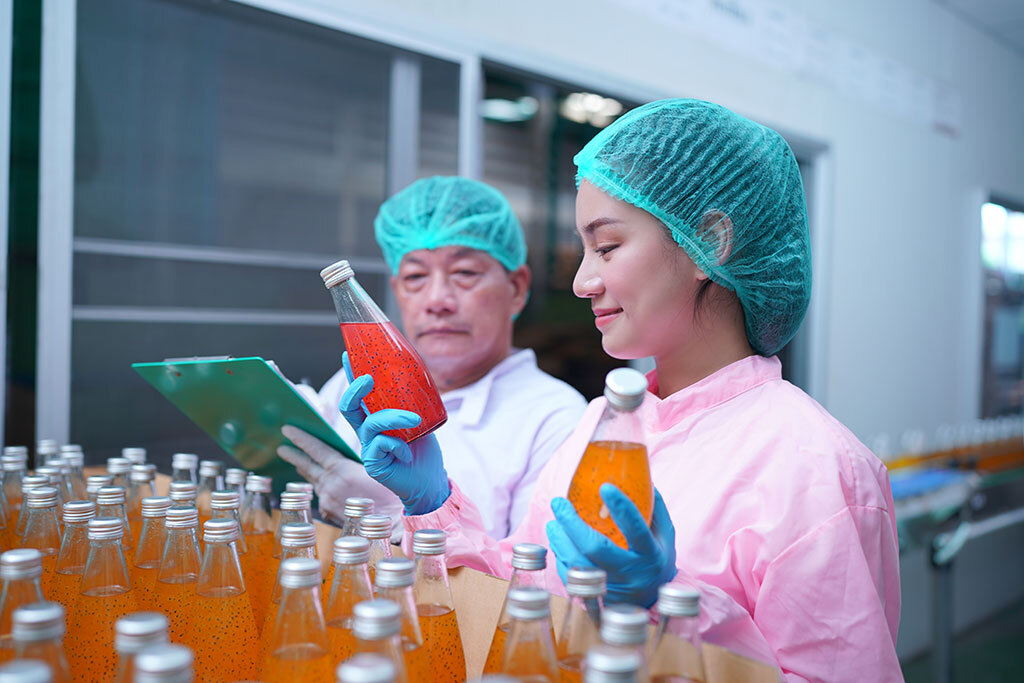
Purchasing an automated liquid packaging machine is a major operational decision. The equipment you choose will impact your production efficiency, product quality, and long-term scalability, so it’s important to approach the process with clarity and strategy.
Rather than simply looking at price or basic specifications, manufacturers benefit from evaluating machines based on real production needs, current limitations, and future growth plans. Follow these steps to make the right decision for your production line.
Step 1: Define Your Production Goals
Begin by identifying what you need the machine to accomplish today and in the years ahead. Consider your expected output volume, the types of liquids you produce, and the range of container sizes or materials you work with. Clear goals help narrow your options and prevent overspending on capabilities you don’t need, while also preventing you from choosing equipment that becomes limiting as your business expands.
Step 2: Evaluate Your Current Workflow
Look closely at how your existing packaging process performs. Identify bottlenecks, slowdowns, labor-heavy tasks, and error-prone steps. Understanding these weaknesses will highlight where automation will deliver the biggest improvements. This evaluation also helps determine whether your facility requires a full-line solution or targeted upgrades to specific parts of the packaging process.
Step 3: Determine Required Machine Capabilities
Different products require different filling technologies—such as volumetric, piston, or pump fillers—and each option offers unique benefits based on viscosity, foaming, particulates, and temperature sensitivity. Consider how fast the machine needs to run, the fill levels it must achieve, and the level of accuracy your industry demands.
Step 4: Check Compatibility with Existing Equipment
Before investing, assess how the new machine will integrate into your current production line. Some facilities may require custom conveyors, spacing mechanisms, or control systems to create a seamless flow. Choosing equipment designed for modular expansion or easy integration can reduce installation time, prevent workflow disruptions, and maximize long-term flexibility.
Step 5: Review Hygiene & Regulatory Needs
Industries such as pharmaceuticals, food and beverage, and cosmetics often require strict sanitation features like stainless steel construction, clean-in-place (CIP) systems, or specific certification standards. Ensuring the equipment meets regulatory expectations from the start helps avoid compliance issues, recalls, or costly retrofits later.
Step 6: Assess Long-Term Maintenance & Service
Reliability goes beyond the machine itself. It includes access to spare parts, availability of technical support, and the manufacturer’s commitment to long-term service. Ask about preventive maintenance programs, technician response times, and training opportunities for your internal team.
Step 7: Consider Total Cost of Ownership (TCO)
Rather than focusing solely on the purchase price, evaluate operating costs such as energy consumption, maintenance, spare parts, labor reduction, and expected lifespan. A slightly higher upfront investment may provide stronger long-term savings if the machine reduces waste, minimizes labor, or offers faster cycle times. TCO gives a clearer picture of true return on investment (ROI).
Step 8: Partner with an Experienced Manufacturer
Working with a trusted equipment provider gives you access to industry expertise, customization options, and high-quality equipment tailored to your production needs. Experienced manufacturers help guide the selection process, recommend the right configurations, and support your equipment long after installation, ensuring a stronger long-term investment.
Automated Liquid Packaging FAQs
Adopting automated liquid packaging equipment is a major step for any manufacturer, and it’s natural to have questions about how the technology works, what it offers, and what to expect during implementation. The following FAQs address the most common concerns and provide clear guidance for companies exploring automation.
What Types of Products Can Be Packaged with Automated Liquid Packaging Systems?
Automated liquid packaging systems can handle a wide range of products, from thin, free-flowing liquids like beverages and cleaning solutions to thicker, more viscous products such as lotions, oils, syrups, and chemical gels. The key is selecting the right filling technology (volumetric, piston, pump, etc.) based on viscosity and product characteristics.
How Do I Know Which Filling Technology Is Right for My Product?
The correct filling method depends on viscosity, particulate content, foaming potential, temperature sensitivity, and desired fill accuracy. For example, piston fillers work well for thicker products, while pump or metering systems excel with thin or foamy liquids. A reputable equipment manufacturer can evaluate your product and recommend the best fit.
Can Automated Liquid Packaging Systems Integrate with My Existing Equipment?
Yes, most modern systems are designed for modular integration. Manufacturers can connect filling, capping, labeling, and conveying equipment into your current line. Custom configurations or modifications may be required to match layout, product flow, or speed requirements.
How Much Space Is Needed for an Automated Packaging Line?
Space requirements vary depending on machine type, number of stations, and production goals. Some systems fit compact operations, while others require larger footprints for multi-stage lines. A site assessment helps ensure the equipment fits your facility and supports efficient workflow.
What Is the Typical ROI for Automated Liquid Packaging Equipment?
ROI depends on factors like output volume, labor reduction, waste reduction, and lower rework rates. Many manufacturers see a return within one to three years due to significant savings in labor, improved efficiency, and consistent product quality.
How Difficult Is It to Operate & Maintain Automated Packaging Machinery?
While automated systems are more complex than manual equipment, they are designed for operator-friendly use. Touchscreen controls, recipe settings, and automated diagnostics simplify daily operation. Preventive maintenance and proper training ensure long-term reliability and minimal downtime.
What Industries Benefit Most from Automated Liquid Packaging?
Industries such as food and beverage, chemical processing, cosmetics, pharmaceuticals, and specialty manufacturing benefit greatly from automation. Any business needing consistent fill levels, reliable seals, and higher throughput can gain value from automated solutions.
How Customizable Are Automated Liquid Packaging Systems?
Highly customizable. Manufacturers can tailor systems to specific container sizes, fill volumes, product viscosities, production speeds, sanitation requirements, and integration needs. Modular designs allow businesses to expand or adapt their systems as product lines grow.
Partner with Oden Machinery to Modernize Your Liquid Packaging Line
Automated liquid packaging has become one of the most valuable investments a manufacturer can make. From higher output and lower operating costs to stronger quality control and safer working conditions, automation transforms production into a faster, more efficient, and more reliable system. As markets grow more competitive and customer expectations continue to rise, businesses that adopt automated solutions gain the stability and scalability needed to support long-term success.
Choosing the right equipment is easier with a knowledgeable partner. At Oden Machinery, we specialize in designing and building automated liquid packaging systems that match your products, workflow, and growth plans. Whether you need a single machine or a fully integrated line, their team can help you identify the ideal solution, customize it for your operation, and provide ongoing support to keep your production running at its best.
Contact us today to learn more about our available inventory of used liquid packaging equipment and find the perfect solution for your operation.
