 716.874.3000
As demand for automation continues to rise across liquid packaging operations, more companies are investing in filling, capping, labeling, and conveying systems to increase output and reduce labor dependency. But automation only delivers results when every component works together as a system, not as a collection of individual machines.
That’s why installation is one of the most critical phases of any automated packaging project. It directly impacts uptime, scalability, and how quickly a line starts generating return on investment.
In this guide, we’ll break down the key stages of automated packaging line installation, highlight what separates a high-performing system from an underperforming one, and share practical tips to help you get it right the first time.
The Importance of Proper Automated Packaging Line Installation
It’s easy to assume that once the right machines are selected, performance will follow. In reality, many lines fall short not because of poor equipment, but because of gaps in planning, integration, and execution.
In other words, a packaging line is only as strong as the way it’s put together.
Small missteps early in the process can create long-term operational friction. A filler that slightly outpaces the capper leads to constant backups, and a poorly planned layout makes routine maintenance harder than it should be. At the same time, utilities that weren’t properly accounted for delay startup or force costly adjustments mid-installation.
These subtle inefficiencies compound over time. The result is a line that technically runs but never reaches its full potential. As a result, throughput lags behind expectations, operators spend more time reacting than producing, and maintenance becomes reactive instead of strategic.
Getting installation right from the beginning changes everything. Understanding how different machines interact, how layouts affect flow, and how to prepare a facility before equipment arrives can prevent issues that are otherwise expensive to fix later.

7 Stages of Automated Packaging Line Installation
The process of installing an automated packaging line is a sequence of tightly connected stages, where each decision influences the next. Miss a step, rush a phase, or overlook how one machine impacts another, and problems start to surface quickly. But when each stage is approached with consideration, the result is a system that runs smoothly, scales with demand, and delivers consistent output from day one.
Here is a breakdown of the key stages that turn a packaging line from a plan into a fully operational system.
1. Discovery, Planning, & Line Design
Every successful installation starts long before equipment arrives on site. This stage focuses on defining what the line needs to achieve. Production targets, product variations, container types, and future growth plans all play a role in shaping the system.
From there, the facility itself becomes part of the equation. Available space, utility access, workflow patterns, and compliance requirements all influence how the line is designed.
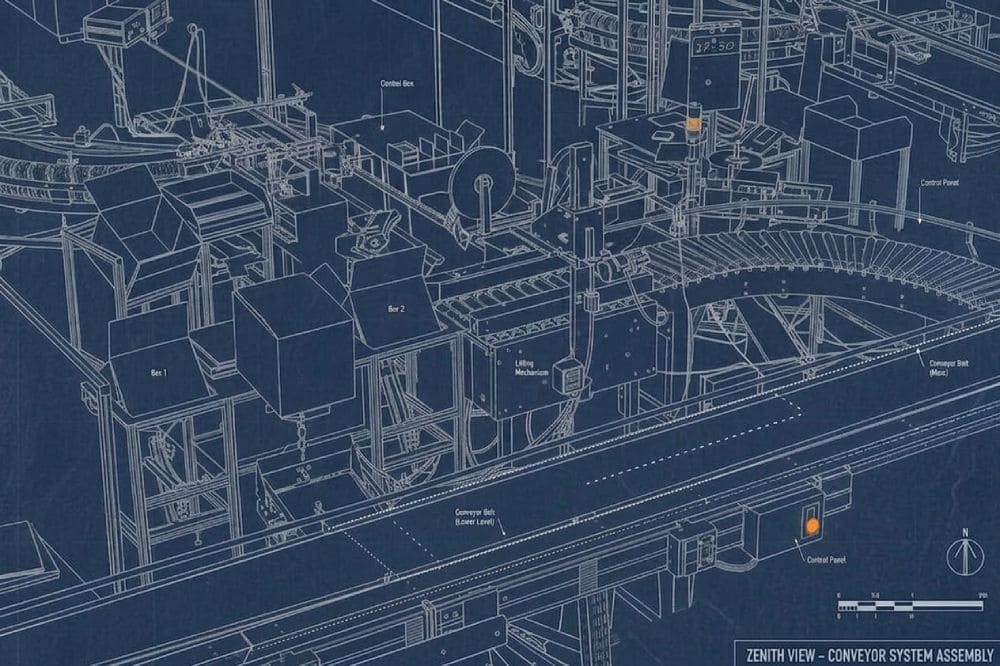
Mapping out the full process, from filling to end-of-line packaging, helps identify how each machine will interact with the next.
This stage is where compatibility matters more than individual machine performance. When done right, planning creates a clear blueprint for a line that supports target output while leaving room for expansion. It also reduces the risk of bottlenecks that are difficult to fix later.
2. Equipment Sourcing & Pre-Installation Preparation
Once the design is finalized, the focus shifts to sourcing the right equipment and preparing for installation. This process includes selecting machines that align with the planned throughput and integration requirements.
For many operations, high-quality used equipment becomes a strategic advantage here. Proven machines can offer reliable performance while reducing capital investment and shortening lead times compared to new builds.
Before delivery, packaging equipment is typically inspected, refurbished if needed, and tested to confirm it meets performance expectations. In some cases, partial assembly or factory acceptance testing helps identify issues early.
At the same time, the facility must be prepared. Strong preparation reduces installation delays and helps the project move forward without unnecessary interruptions. Power supply, compressed air, drainage, and layout markings should all be ready before equipment arrives. Logistics planning also plays a role, especially when multiple machines need to be delivered and installed in a specific sequence.
3. Mechanical Installation & Line Assembly
With equipment on site, the physical build begins.
Machines are positioned according to the layout plan, anchored in place, and connected through conveyor systems. Alignment is critical here. Even small deviations can affect product flow and increase wear over time.
Spacing between machines also matters. Operators need room to work, and maintenance teams need access to key components without dismantling half the line.
When installation is handled with precision, the system runs smoothly and is easier to maintain over time. It also reduces the likelihood of mechanical strain that can lead to premature breakdowns.
4. Electrical Integration & Control System Setup
Once the mechanical components are in place, the focus shifts to making the system function as a unified operation. This process involves wiring each machine to power sources and control panels, integrating programmable logic controller (PLC) systems, and establishing communication between equipment. Sensors, safety systems, and interlocks are configured to support both performance and operator protection.
The human-machine interface plays a key role as well. A well-configured interface allows operators to monitor and control the line efficiently.
Proper integration transforms individual machines into a synchronized system. Without it, even high-quality equipment can operate in isolation, leading to frequent stoppages and inconsistent output.
5. Calibration, Testing, & Optimization
Before full production begins, the line needs to be tested and refined. Initial dry runs help verify that all components are functioning as expected. From there, calibration begins. Fill levels, speeds, and timing are adjusted to match product specifications. Then, running actual product through the line reveals how the system performs under real conditions and is often where bottlenecks become visible.
Adjustments at this stage can significantly improve throughput and reduce product waste. Fine-tuning the balance between machines creates a more consistent and efficient operation.
6. Commissioning & Operator Training
When the system is optimized, it moves into commissioning. This phase confirms that the line meets performance expectations and is ready for regular use. Standard operating procedures are established, and documentation is finalized.
Operator training is just as important as the equipment itself. A well-trained team accelerates the transition from installation to full production as well as reduces the risk of errors that can disrupt operations. Teams need to understand how to run the line, handle changeovers, and respond to common issues.
7. Post-Installation Support & Continuous Improvement
Installation doesn’t end when the line starts running.
Ongoing support helps maintain performance and adapt to changing production needs. Regular maintenance planning, performance monitoring, and incremental upgrades all contribute to long-term success.
As production demands evolve, the ability to scale or modify the line becomes increasingly valuable. Working with a knowledgeable partner can make these adjustments more efficient and less disruptive.
Tips for a Successful Automated Packaging Line Installation
Even with the right equipment and a solid plan, the difference between a smooth installation and a frustrating one often comes down to execution. The following best practices help reduce risk, improve efficiency, and set your packaging line up for long-term success.
Define Clear Production Goals
Start with a precise understanding of what the line needs to achieve. Output targets, product variations, container sizes, and expected production shifts should all be clearly defined upfront. It’s also important to think beyond current demand. If growth is on the horizon, your line should be designed to handle increased volume without requiring a complete overhaul.
Without this level of clarity, teams often end up overbuilding certain areas while overlooking others. The result is either a line that struggles to keep up or one that becomes unnecessarily complex and expensive to operate.
Plan for Future Growth
Design the line with scalability in mind, which could mean leaving space for additional equipment, selecting machines that can handle higher speeds, or building flexibility into the layout for future product variations. A line that is too tightly constrained becomes difficult to expand, often requiring costly redesigns later, while planning ahead allows your operation to adapt more easily as demand evolves.
Prioritize Full-Line Compatibility
Look beyond individual machine performance and focus on how each component interacts with the rest of the system. Every machine on the line must operate at a pace that complements the others. A mismatch in speed, timing, or functionality can create bottlenecks that disrupt the entire operation.
Compatibility also extends to controls and communication systems. Machines that cannot properly “talk” to each other often require manual intervention, which reduces efficiency and increases the risk of errors.
A well-balanced line keeps product moving consistently, reduces stoppages, and creates a more predictable production environment.
Consider High-Quality Used Equipment
Evaluate used equipment as a strategic option, not just a cost-saving measure.
Many used machines have a proven track record in real production environments, which can reduce uncertainty compared to newly manufactured systems. When properly inspected and refurbished, they can deliver strong performance while significantly lowering upfront investment.
Another advantage is lead time. New equipment often comes with long manufacturing delays, while used equipment can be sourced and deployed much faster.
The key is working with a partner who understands how to evaluate, match, and integrate these machines into a cohesive system.
Prepare the Facility in Advance
When facilities are not properly prepared, installation teams are forced to pause or rework setups, which can quickly delay timelines and increase costs.
Have utilities, layout, and infrastructure ready before equipment arrives, which involves confirming that power capacity meets machine requirements, compressed air systems are properly sized, and drainage or ventilation needs are addressed. Floor space should be clearly marked based on the layout plan, with consideration for operator movement, maintenance access, and material flow.
Partner with Experienced Integrators
Work with professionals who understand how to connect systems, not just supply machines.
An experienced integrator looks at the entire line as a single system, identifying how each component influences performance. They can anticipate challenges before they arise and make adjustments during installation that improve long-term reliability. Without this level of expertise, teams often rely on trial and error, which leads to longer ramp-up times and inconsistent results.
Test with Real Products Early
Run actual products through the system as soon as possible during testing.
Dry runs are useful for identifying basic mechanical or electrical issues, but they don’t reveal how the line behaves under real production conditions. Factors like product viscosity, container shape, and labeling requirements can all affect performance.
Testing early allows teams to identify these variables and make adjustments before full-scale production begins. This step often uncovers bottlenecks that would otherwise go unnoticed until the line is already in operation.
Train Operators Thoroughly
Equip your team with the knowledge to run, adjust, and troubleshoot the line. Training should cover normal operation, changeovers, routine maintenance, and basic troubleshooting. Operators should understand not only how to use the equipment, but also why the system is configured the way it is.
This deeper understanding allows your team to make smarter decisions when issues arise. The more confident they are, the less downtime you’ll experience during day-to-day production.
Automated Packaging Line Installation FAQs
How Long Does It Take to Install an Automated Packaging Line?
Installation timelines vary depending on the complexity of the system, the level of customization, and how prepared the facility is. Simpler lines may be installed in a matter of weeks, while more complex systems can take several months from planning to commissioning.
Can Used Packaging Equipment Perform as Well as New?
When properly sourced, inspected, and integrated, used equipment can deliver performance comparable to new machines. In many cases, it offers a faster and more cost-effective path to building or expanding a line.
What Are the Most Common Installation Challenges?
Integration issues between machines, limited facility space, and insufficient utility preparation are among the most common challenges. These installation challenges often stem from gaps in planning rather than equipment quality.
How Do I Know If My Facility Is Ready?
A ready facility has the necessary power, utilities, and space to support the planned line layout. It also accounts for workflow, safety, and future expansion.
Do I Need a Full Line, or Can I Upgrade in Stages?
Both approaches are possible. Some packaging operations install a complete line at once, while others expand in phases. The right choice depends on budget, production needs, and long-term goals.
What Kind of Support Should I Expect After Installation?
Post-installation support typically includes maintenance planning, troubleshooting assistance, performance optimization, and access to replacement parts.
Choose Oden Machinery for High-Quality Used Equipment for Your Automated Packaging Line
The performance of an automated packaging line is shaped long before it reaches full production. Every decision made during planning, installation, and integration influences how efficiently the system runs, how quickly it scales, and how much value it delivers over time. Taking the time to approach installation with the right strategy, the right equipment, and the right expertise can mean the difference between a line that struggles and one that performs consistently.
At Oden Machinery, we help bridge that gap.
By combining deep knowledge of liquid packaging systems with access to high-performance used equipment, we support businesses in building lines that are both cost-effective and built for long-term success. If you’re evaluating a new packaging line or looking to upgrade your current system, contact us today. We can tell you all about our available inventory of used liquid packaging equipment, and together, we’ll find the perfect solution for your automated packaging operation.
